
Last updated November 23, 2026
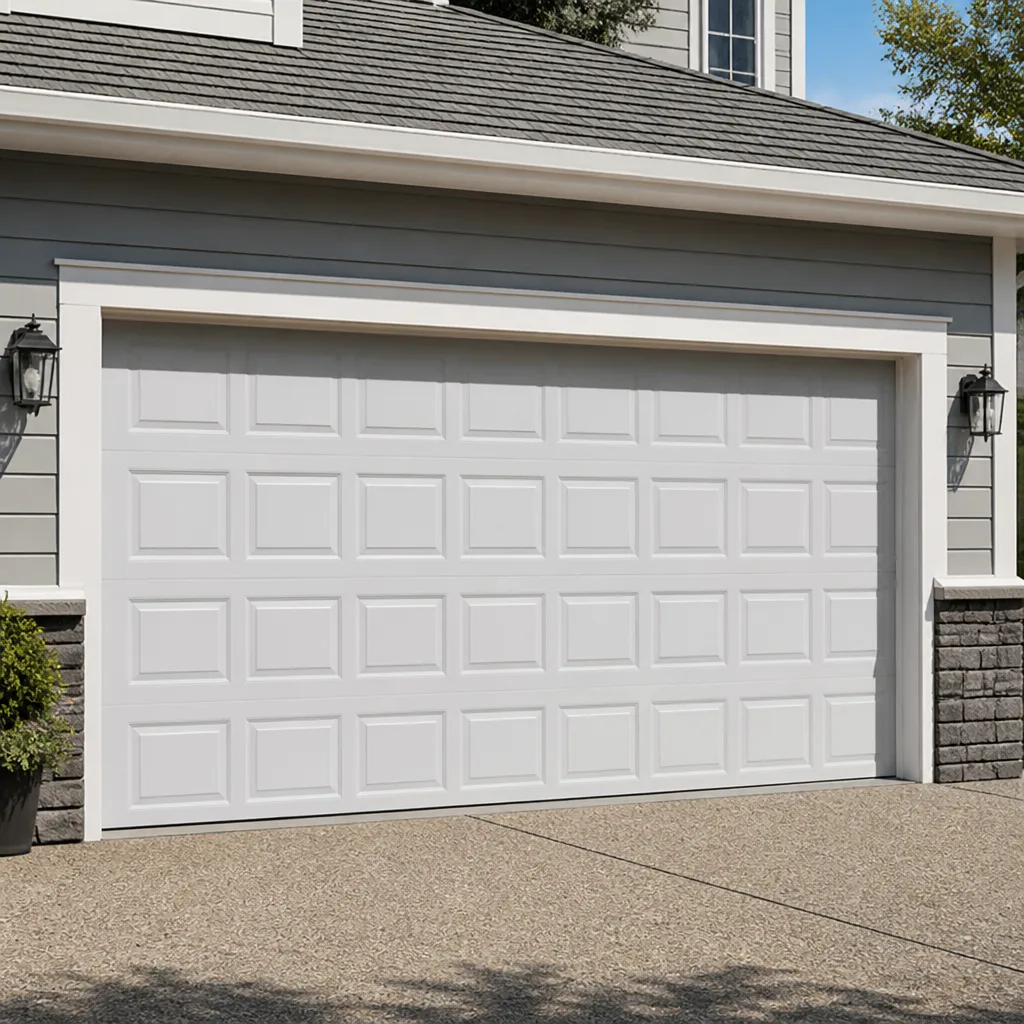 Raised-panel steel
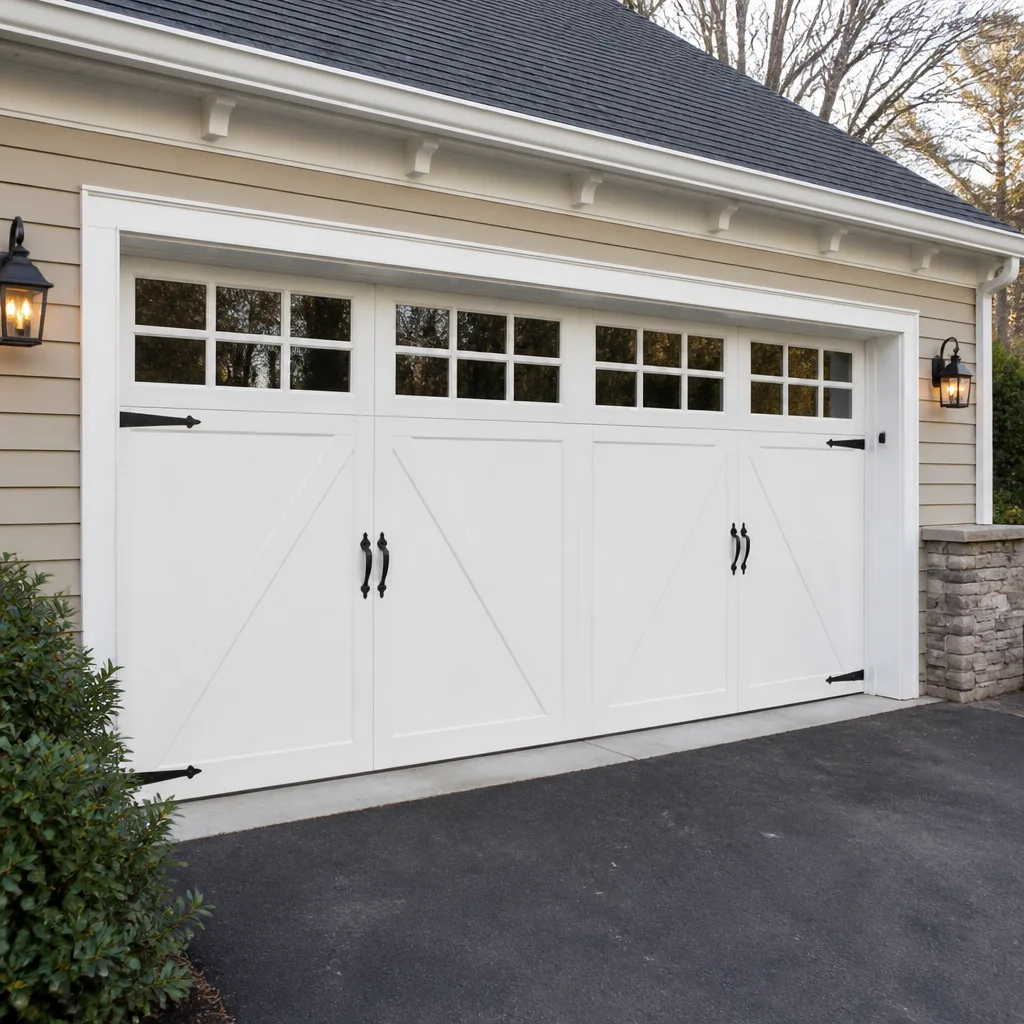 Carriage house
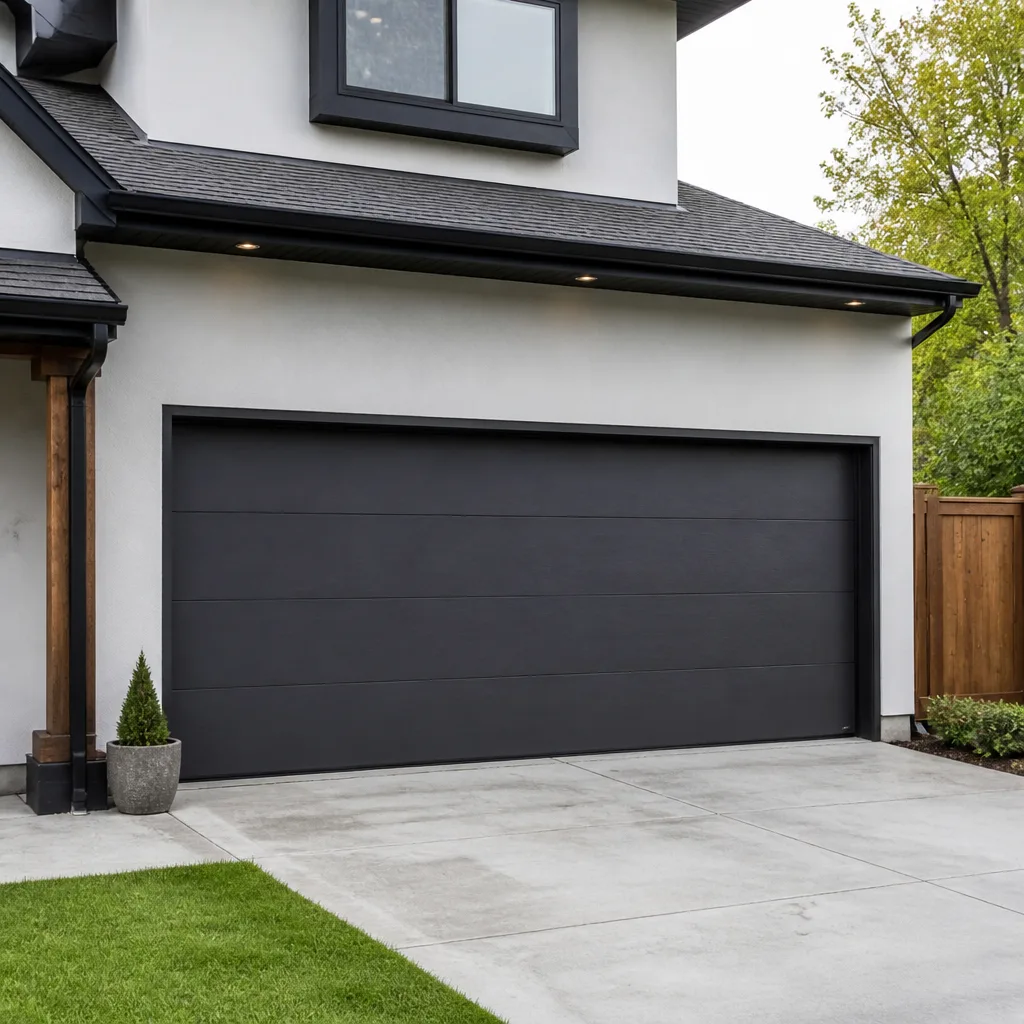 Modern flush
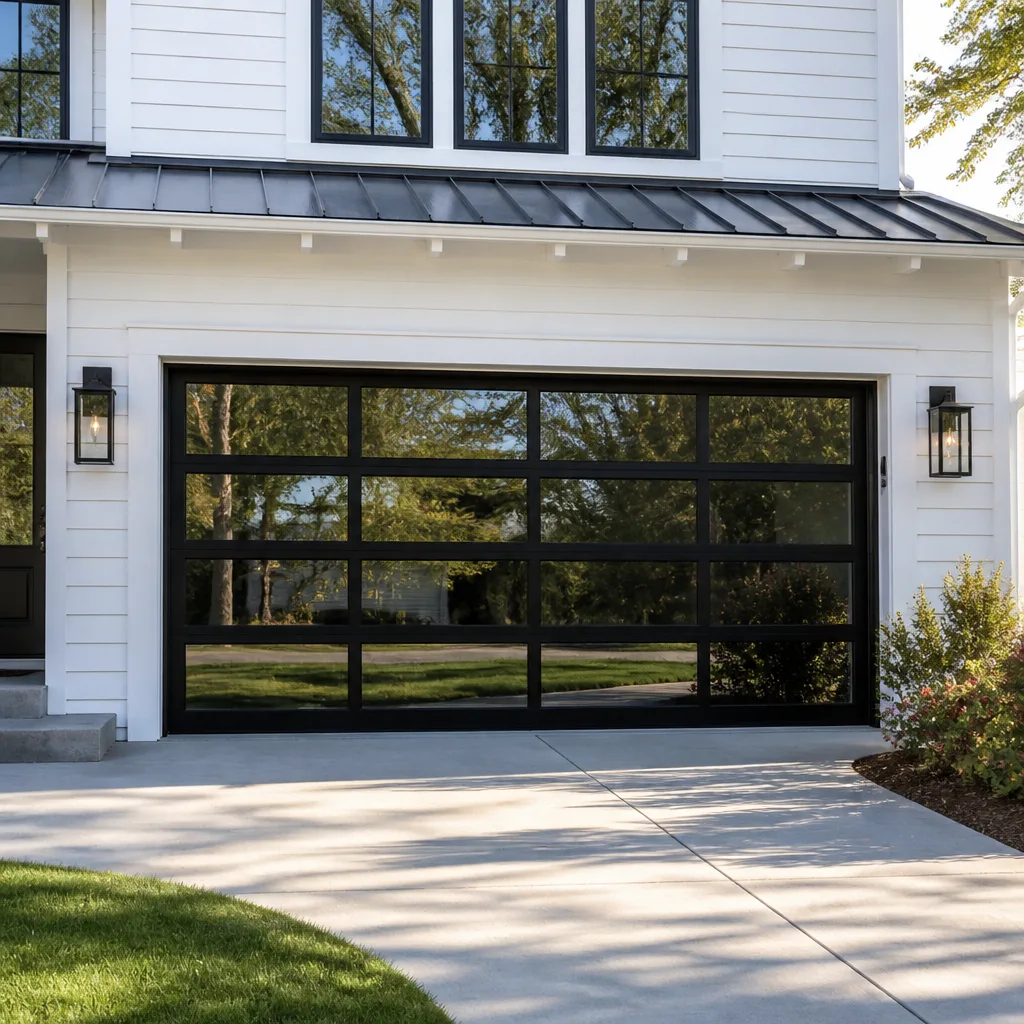 Full-view glass
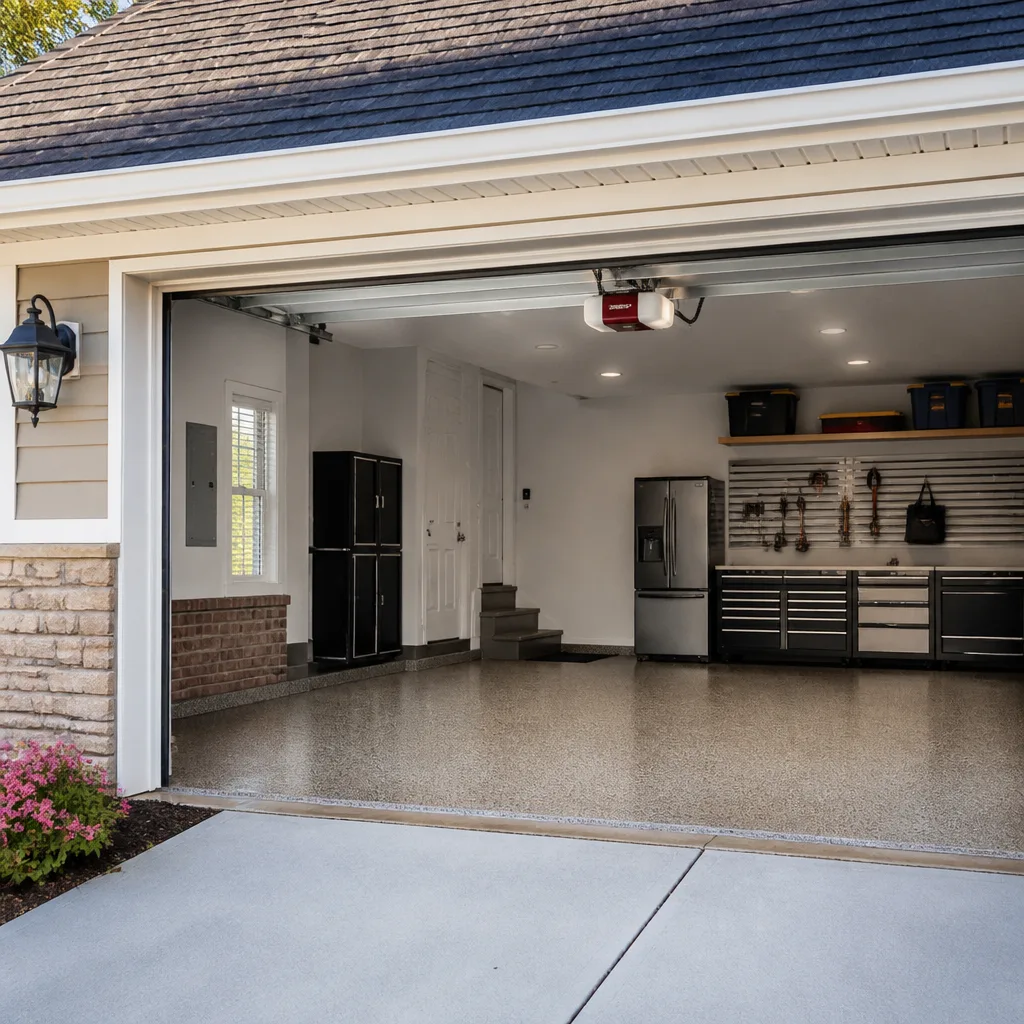 LiftMaster openers
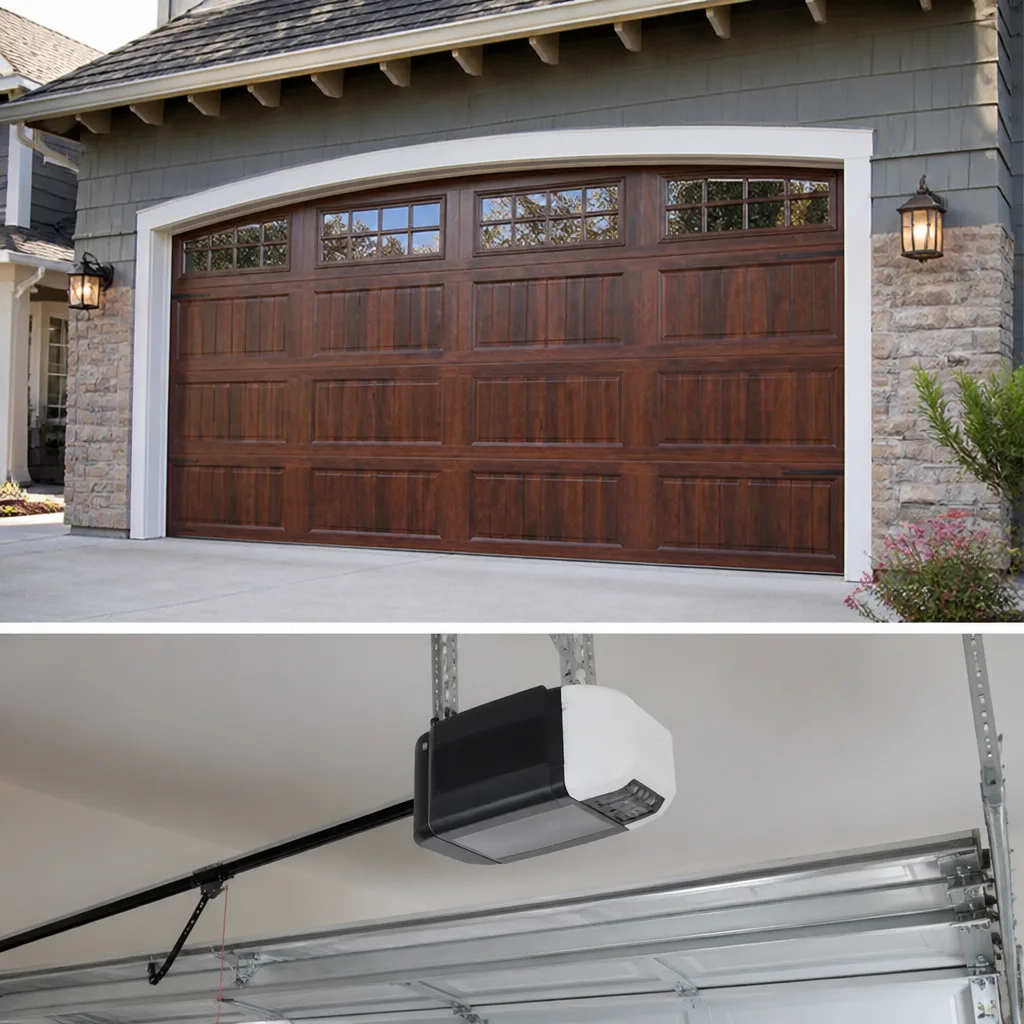 Chamberlain openers
Full 25-point door and opener safety check with every visit - springs, cables, rollers, tracks, and your LiftMaster or Chamberlain opener included
You get a price before we start. It does not change when the pro arrives.
Get your free estimateChoosing the Right Garage Door Brand: A Buyer’s Guide for Tacoma
Most garage door brand advice is written as if every homeowner lives within an hour of a major distribution center. In Tacoma, that assumption breaks down fast. A brand with a sterling national reputation can still leave you waiting days for a replacement panel if the nearest warehouse that stocks it is up in Seattle and nobody local carries the part. So the smarter question isn’t “which brand is best?” It’s “which brand is best supported here, in this climate, by technicians who actually work on it?” This guide covers the brand comparison points that matter for a Tacoma home: parts availability, insulation ratings for a wet marine climate, steel gauge, finish quality, warranty fine print, and how to match an opener to the phone in your pocket rather than the sticker on the box.
Quick Answer
The right garage door brand for a Tacoma home is the one with local parts availability, an insulation rating suited to a wet marine climate, and a warranty the manufacturer honors without forcing you back through the original installer. Clopay, Amarr, Wayne Dalton, and Raynor all have strong residential lines, but the deciding factors are supply chain, steel gauge, and warranty terms, not national brand recognition. For openers, match the brand to your smart-home ecosystem (LiftMaster and Chamberlain for MyQ, Genie for its own app) before you worry about horsepower.
Styles & brands we work with
- Raised-panel steel
- Carriage house
- Modern flush
- Full-view glass
- LiftMaster openers
- Chamberlain openers
Table of Contents
- Clopay vs. Amarr vs. Wayne Dalton vs. Raynor: A Tacoma Comparison
- Why Insulation Rating Matters More in Tacoma Than in Phoenix
- Choosing an Opener Brand by Ecosystem, Not Horsepower
- Steel Gauge and Finish Coat: What Five Wet Seasons Actually Do
- How to Read a Garage Door Warranty in Real Terms
- When Custom or Specialty Doors Make Sense in Tacoma
- Why Local Parts Availability Decides More Than Brand Reputation
- What a Multi-Brand Technician Actually Does For You
Clopay vs. Amarr vs. Wayne Dalton vs. Raynor: A Tacoma Comparison
These four manufacturers cover the majority of residential steel doors you’ll see on Tacoma homes, and each has a slightly different set of strengths. The comparison below focuses on the factors that actually affect a Pacific Northwest homeowner: how well the door resists moisture, how well it insulates, whether parts are gettable locally, and how the warranty reads.
- Clopay – Deepest residential catalog of the four, with steel, wood, aluminum full-view, and carriage-house lines. Insulation options span from uninsulated to polyurethane-backed three-layer construction. Parts availability is strong because Clopay is one of the most widely installed brands in the region.
- Amarr – Strong on insulated steel doors with a broad panel and color selection. Warranty terms on Amarr doors tend to be clearly written, which matters when you’re trying to figure out if a section replacement is covered. Local parts availability is good but can be model-dependent.
- Wayne Dalton – Known for its foam-core insulated doors and the Thermospan and Classic Steel families, both common on tract homes across Pierce County. Panel styles are somewhat more limited than Clopay’s, but replacement parts are usually attainable.
- Raynor – Solid steel door lineup with a focus on durability. Fewer Raynor doors are installed in Tacoma than Clopay or Wayne Dalton, so a Raynor-specific panel or spring can occasionally take longer to source. Worth knowing before you commit if a same-week repair matters to you.
What all four share: none of them are “bad” doors. The real question is which one your technician can get parts for quickly when a panel gets backed into or a spring snaps on a Sunday. We work on all four, plus LiftMaster, Chamberlain, Genie, and Craftsman opener systems, which means we aren’t steering you toward one brand because it’s the only one we know. When you call us for garage door repair, we diagnose against the brand that’s actually on your house, not the one we prefer to install.
Why Insulation Rating Matters More in Tacoma Than in Phoenix
Insulation R-value gets sold as a heating-and-cooling benefit, and in a colder climate that’s real. But in Tacoma, the argument for an insulated door has as much to do with moisture management as with energy bills. A wet marine climate means the inside face of an uninsulated steel door will sweat, and that condensation creates a persistent humidity problem in an attached garage. An insulated door with a thermal break between the steel skins keeps the interior face closer to room temperature and cuts down on that sweat.
Here’s how the common insulation options compare:
- Uninsulated single-layer steel – Cheapest, lightest, noisest. Fine for a detached shop or a shed. A poor fit for an attached garage in Tacoma if you use it as a workshop, laundry area, or entry to the house.
- Double-layer steel with polystyrene – Modest insulation, quieter than single-layer, and enough thermal break to reduce condensation. A reasonable middle option for many Tacoma homes.
- Three-layer steel with polyurethane – Highest R-value of the standard options, quietest doors, best condensation control. Worth the step up if the garage is finished, heated, or used as living space.
Insulation also affects noise. A garage door opening under a second-floor bedroom is noticeably louder when it’s uninsulated. If that matters in your Tacoma home, choose a door with a polyurethane core and a steel back, not just a vinyl back with no insulation. That’s the single biggest upgrade in perceived quality, and it’s the one homeowners tend to skip on the first quote.
Choosing an Opener Brand by Ecosystem, Not Horsepower
The most common mistake in opener selection is choosing the unit with the highest horsepower rating. A 1.25-HP opener is overkill for a single-car door, and bolt-on horsepower doesn’t make a garage door open more reliably. What does matter is which smart-home system the opener talks to and whether the local technicians who service it can get a replacement logic board and remote in a reasonable window.
Here’s how the main residential opener brands stack up on ecosystem and parts:
- LiftMaster – Uses MyQ as its smart-connect platform, integrates cleanly with most smart-home hubs, and has broad local parts availability. The workhorse of the residential market, and a good default if you want ecosystem flexibility.
- Chamberlain – Chamberlain Group makes both Chamberlain and LiftMaster, and both run MyQ. Functionally similar ecosystem support; the difference is often belt-drive versus chain-drive configuration and cosmetic details.
- Genie – Uses its own Aladdin Connect app rather than MyQ. Works well, but the integration path differs. Fine if you’re not already tied to MyQ, less convenient if you have another MyQ device on the network.
- Craftsman – Common in older homes. Parts are still available for most models, but the smart-home features are limited compared to current LiftMaster and Genie units.
If you already use MyQ cameras or a Chamberlain smart bridge elsewhere in the house, staying with LiftMaster or Chamberlain keeps everything in one app. If you’re starting fresh, Genie’s system works well. If your current opener is a 15-year-old Craftsman chain-drive and it still works, there’s no reason to replace it just to get an app. We service all four brands, so garage door opener repair doesn’t depend on which unit is bolted to your ceiling.
Steel Gauge and Finish Coat: What Five Wet Seasons Actually Do
Steel gauge is a spec that separates a door that looks good on installation day from a door that still looks good after several wet Pacific Northwest winters. It’s also the spec most easily hidden in a showroom conversation, because a lighter-gauge door looks identical to a heavier one behind a coat of paint.
Here’s the rule of thumb: a 24-gauge steel face resists denting and panel distortion better than a 26-gauge face. The difference is a few thousandths of an inch, but it shows up over time. A 26-gauge door is more prone to dents from a stray bicycle or a wheelbarrow, and once a dent cracks the finish coat, the exposed steel starts to rust, and rust is what actually shortens a door’s life in a wet climate.
Finish coat quality matters just as much. A hot-dipped galvanized steel base with a baked-on polyester finish holds up better than a door with a thinner paint layer. The three-layer doors from Clopay, Amarr, and Wayne Dalton generally use a heavier galvanized base and a more durable topcoat than budget single-layer models. When you’re comparing doors, ask two questions:
- What gauge is the outer steel skin?
- Is the finish a baked-on polyester and how many coats?
If the sales sheet doesn’t answer those, that’s a red flag. A door built on 26-gauge steel with a thin finish is going to look tired within five Tacoma wet seasons, and no amount of paint touch-up will fix rust that starts between the steel and the paint layer. Heavier gauge and a better finish cost more upfront and less over the life of the door. If you’re weighing replacement against repair, the gauge of the existing door is one of the factors that decides it, and that’s part of the discussion when we look at garage door installation options with you.
How to Read a Garage Door Warranty in Real Terms
“Lifetime warranty” is one of the most misleading phrases in the garage door industry. It rarely means “we’ll replace your door for the rest of your life.” It usually means the manufacturer will cover a specific list of parts for as long as you own the door, minus labor, minus shipping, and minus the exclusions in the fine print. Knowing how to read that fine print saves you from a surprise when a section needs to be replaced three years in.
Ask these questions before you commit to a brand:
- What parts does the “lifetime” cover? Most brands cover the door sections against rust-through and delamination, but not springs, rollers, hinges, or the finish coat. Springs are almost always a separate, shorter warranty (often 3-7 years) because they’re a wear item.
- Is labor covered? Almost never. The manufacturer replaces the part; someone still has to install it, and that labor is on you.
- Does the warranty transfer to a new owner? Some brands transfer automatically, some transfer only if you register within a set window, and some don’t transfer at all. If you plan to sell the house, transferability matters.
- Does it require an authorized installer? A warranty that only honors claims when the original installer did the work can leave the second homeowner stuck. Read this carefully before you buy a house with a newer door.
- What is the rust exclusion? Manufacturers exclude rust caused by the environment. In a wet climate, that exclusion can quietly swallow the “rust-through” coverage the sales sheet advertises.
Clopay and Amarr both publish warranty documents online, and reading them in full is worth 20 minutes. If the terms aren’t clear from the manufacturer’s own site, that’s a brand to approach with caution. When we repair a door, we can also tell you what its warranty still covers and whether a claim is worth pursuing. That’s one reason a single contractor who sees multiple brands is useful: they can compare warranty language from direct experience rather than marketing copy.
When Custom or Specialty Doors Make Sense in Tacoma
A steel door fits most Tacoma homes. But a Craftsman bungalow in the Proctor District, an older Tudor near Wright Park, or a mid-century home along the Narrows have architectural details that a standard raised-panel steel door can’t match. That’s when a custom or specialty door earns its price.
Here’s the maintenance commitment each material actually requires:
- Wood carriage-house doors – Beautiful, warm, period-correct for older Tacoma homes, and the highest-maintenance material on the list. Expect to re-seal or repaint every couple of years in a wet climate. Left unsealed, wood doors crack and warp. They’re a commitment, not a one-time purchase.
- Steel carriage-house doors – The same carriage-house look without the maintenance. A steel door stamped in a carriage style is the practical choice for most Tacoma homes that want the look without the refinishing cycle.
- Full-view aluminum doors – Anodized aluminum frames with glass panels, popular on mid-century and contemporary homes. Low maintenance, but the glass needs cleaning and the frames need periodic inspection for sealant failure. Good for a modern Tacoma home; not period-correct for a Craftsman.
- Composite and faux-wood doors – The middle ground. Look like wood, feel like wood, but hold up better to moisture than real wood. The finish is baked on, so upkeep drops dramatically.
Custom doors are also where lead times and installer skill matter most. A carriage-house door with specific panel proportions has to be measured and ordered; it’s a scheduled project, not a same-day install. If you’re weighing specialty against standard, the trade-off is straightforward: specialty buys looks and material character, standard buys durability and parts availability. Both are valid, and the right answer depends on what you want the front of the house to say.
Why Local Parts Availability Decides More Than Brand Reputation
Here’s the reality that national brand rankings skip: a garage door is a mechanical assembly with a finite set of serviceable parts, and when one fails, the repair timeline depends on whether a technician in Tacoma can get that part this week. A respected national brand with no local distributor inventory means a necessary panel or spring can sit in a warehouse in Seattle for days. A slightly less famous brand with a local distributor means the part is on the door tomorrow.
That’s why we approach brand selection as a supply chain question first. In practice, this means:
- Check what’s already installed in your neighborhood. If most of the homes on your block have Clopay or Wayne Dalton doors, the local supply chain for those brands is likely well-developed, which shortens repair timelines.
- Ask how a technician handles a part that isn’t local. A custom order from the factory is fine; what matters is the expected timeline and whether a temporary fix keeps the door secure until it arrives.
- Consider parts commonality for the mechanism, not just the door skin. Springs, rollers, hinges, and cables are semi-universal, so a spring failure is usually quick to fix regardless of door brand. Panel replacements are the slow part, and that’s the piece most tied to brand.
- Weigh the door’s expected life against its parts lead time. A door with a 25-year lifespan and a 10-day panel lead time still makes sense. A door with a 10-year lifespan and the same lead time may not.
Tacoma’s particular advantage here is that it’s a large enough market to have real local parts availability for the major brands, without the markup of a smaller town. That’s not true everywhere in Pierce County. In more rural areas outside the city, brand selection matters even more, because delivery time from a distributor is longer. Tacoma homeowners can be reasonably confident about parts for Clopay, Wayne Dalton, and Amarr doors, and slightly less confident about Raynor and niche specialty brands.
What a Multi-Brand Technician Actually Does For You
When you call a garage door company, the question that matters most is whether the technician on-site can work on the system that’s actually in your garage. A technician trained on eight brands can diagnose the door in front of them and repair it, rather than recommending a full replacement because their tools and training only cover one manufacturer’s parts. We’re trained on and service Clopay, Amarr, Wayne Dalton, Raynor, LiftMaster, Chamberlain, Genie, and Craftsman, which covers virtually every residential system a Tacoma homeowner is likely to have.
That scope shows up in a few practical ways:
- Repair first, replace only when necessary. A snapped spring, a bent track, a dead opener logic board – these are all repairable. A multi-brand technician has the training to fix them instead of recommending a $2,000 replacement because the brand on your door isn’t the brand in their catalog.
- Single-source service from the opener to the springs to the door itself. You don’t need one contractor for the door and a different one for the opener. That matters when the problem spans both, like a door that only opens halfway because the opener limit switch is out of adjustment.
- Spring repair as a specialty. Spring and cable work is the most dangerous repair in the trade; the tension in a wound torsion spring can release fast enough to cause serious injury if it’s not handled with the proper winding bars and knowledge. We treat spring repair as a distinct specialty, not an add-on, and we never recommend a homeowner attempt it themselves.
- Emergency service for time-sensitive failures. If the door is stuck down and the car is trapped inside, that’s a same-day security and access problem, not an inconvenience to book for next week. We answer 24/7 and can dispatch fast for urgent situations.
A multi-brand approach also gives you an honest answer about brand fit. When a customer asks whether to replace a 12-year-old Raynor with the same brand or switch, we can compare the parts availability, warranty, and repair history of the current door and give a straight answer. If you want a reason to second-guess the national rankings, talk to the technician who sees these doors every week. That’s the value of working with a specialist who isn’t tied to a single manufacturer’s catalog.
Common Mistakes to Avoid
Avoiding these mistakes will save you money and a second repair call:
- Choosing a brand without checking local parts availability. A nationally respected door that requires a custom-order panel with a two-week lead time can be a bad choice for a Tacoma home. Call a local garage door company first and ask them what’s actually in stock in the region before you commit to a brand.
- Buying an uninsulated door for an attached garage. In Tacoma’s wet climate, an uninsulated door sweats and creates humidity problems, plus it’s noticeably noisier. The price difference between uninsulated and insulated is worth the upgrade if the garage borders living space.
- Assuming higher horsepower means a better opener. A 1.25-HP opener is overkill for a single-car door, and horsepower doesn’t correlate with reliability or quiet operation. Match the opener to the door weight and to the smart-home ecosystem you actually use.
- Trusting “lifetime warranty” without reading the exclusions. Most garage door warranties exclude labor, exclude springs after a few years, exclude environmental rust, and sometimes require the original installer for a claim. Read the actual document before you rely on it.
- Skipping the steel-gauge question on the sales sheet. A 24-gauge door and a 26-gauge door look identical on a brochure. Ask directly, because the lighter-gauge door dents and rusts faster in a wet climate.
- Replacing the whole door when the spring or opener is the actual problem. A snapped spring doesn’t mean the door is dead, and a dead opener doesn’t mean the door needs replacing. Get a diagnosis first, not a sales pitch.
- Going with the lowest installed price without checking finish quality. The cheapest door quote often cuts corners on gauge, finish, and hardware. That trade-off costs more in repairs over the life of the door.
- Underestimating local weather on a wood door. Real wood is a beautiful material and a real maintenance commitment in Tacoma. If you’re not going to re-seal every couple of years, choose a steel or composite carriage-style door instead.
See the difference
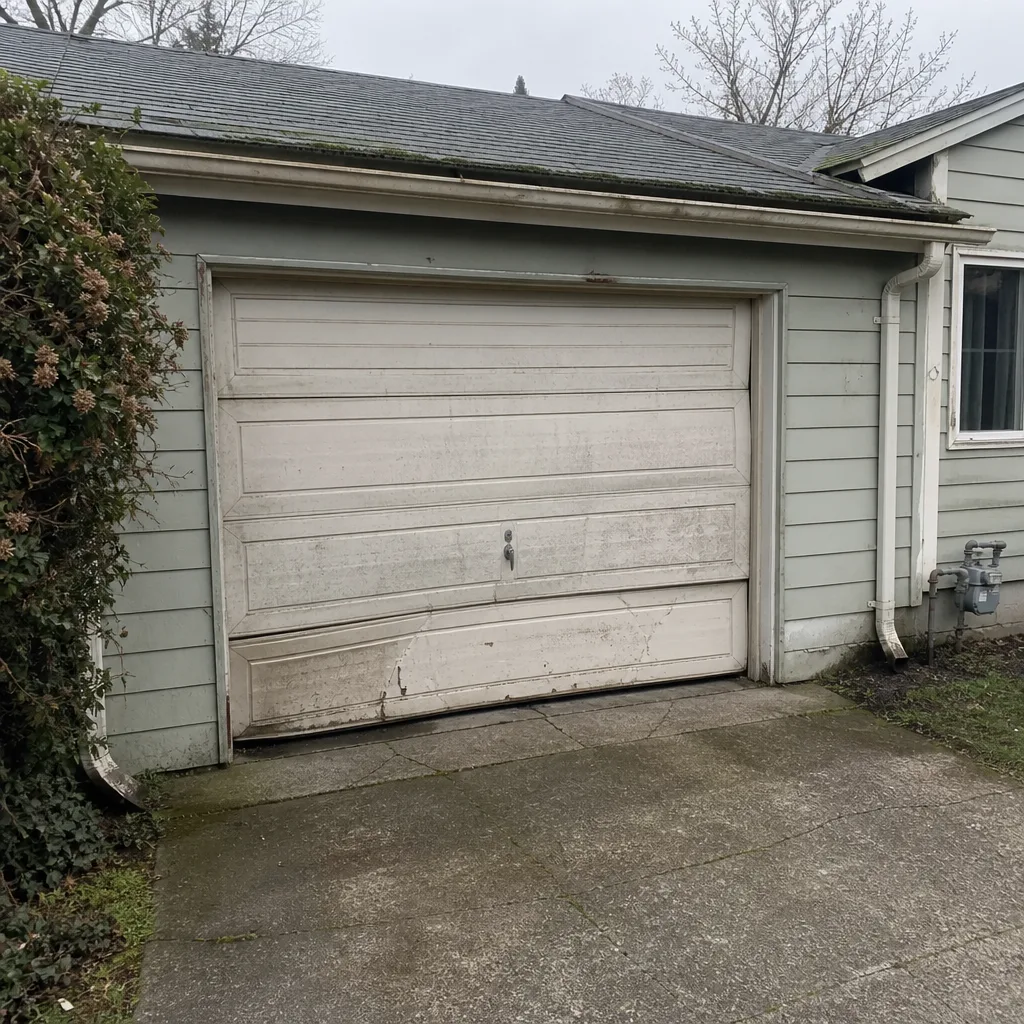 Before
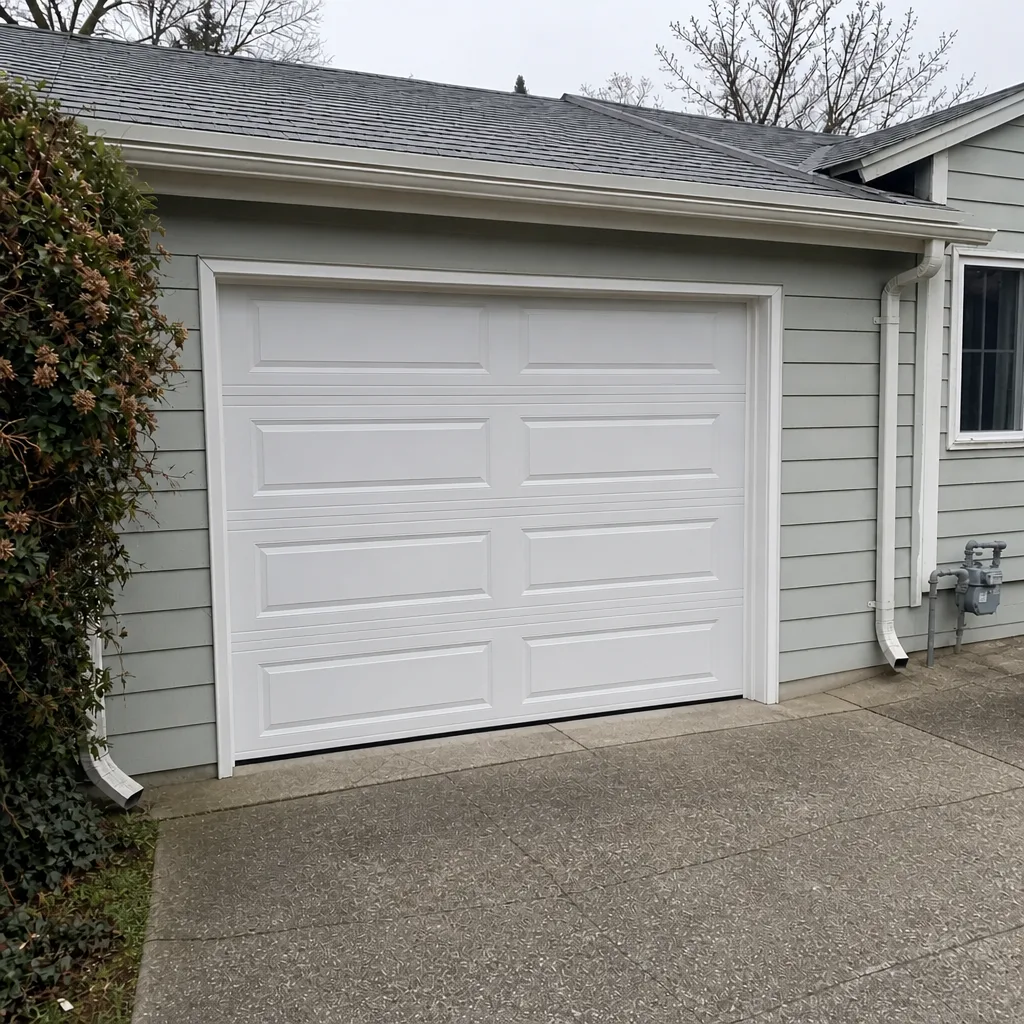 After
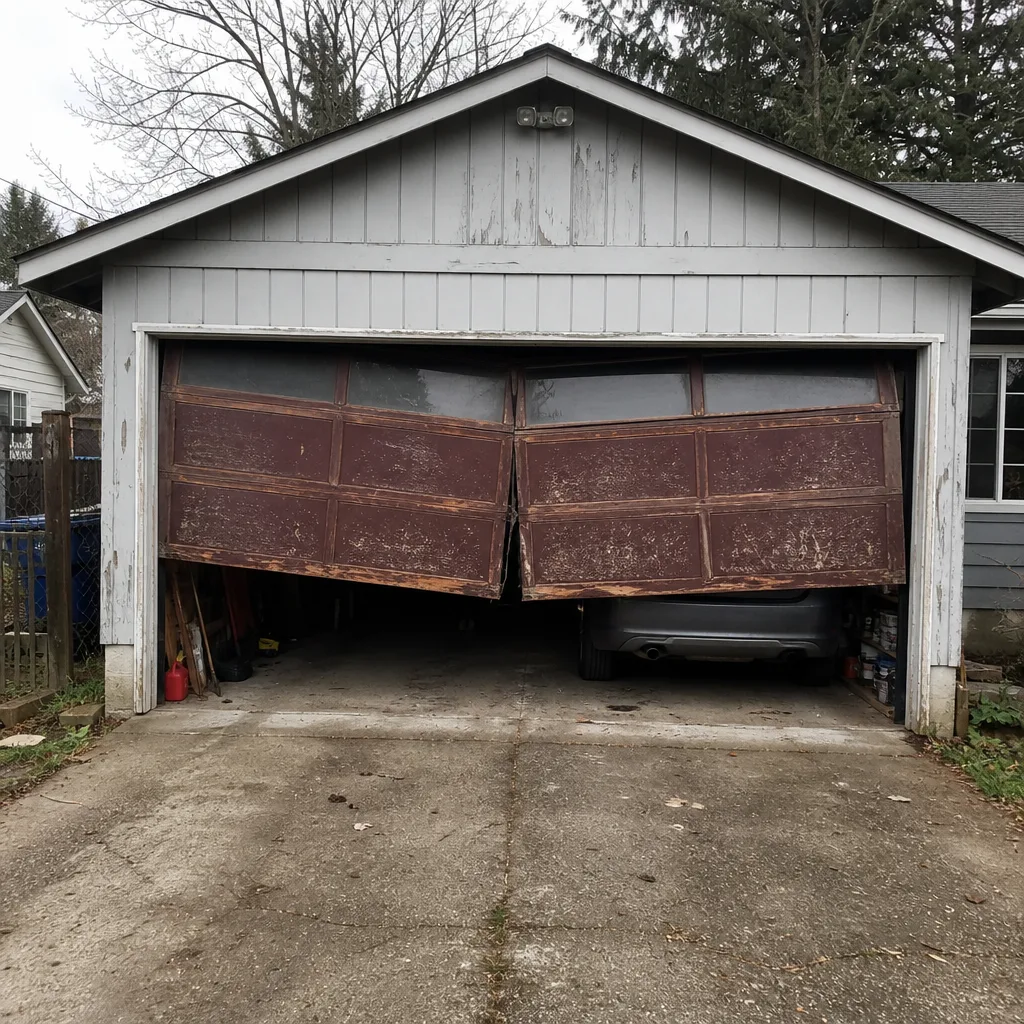 Before
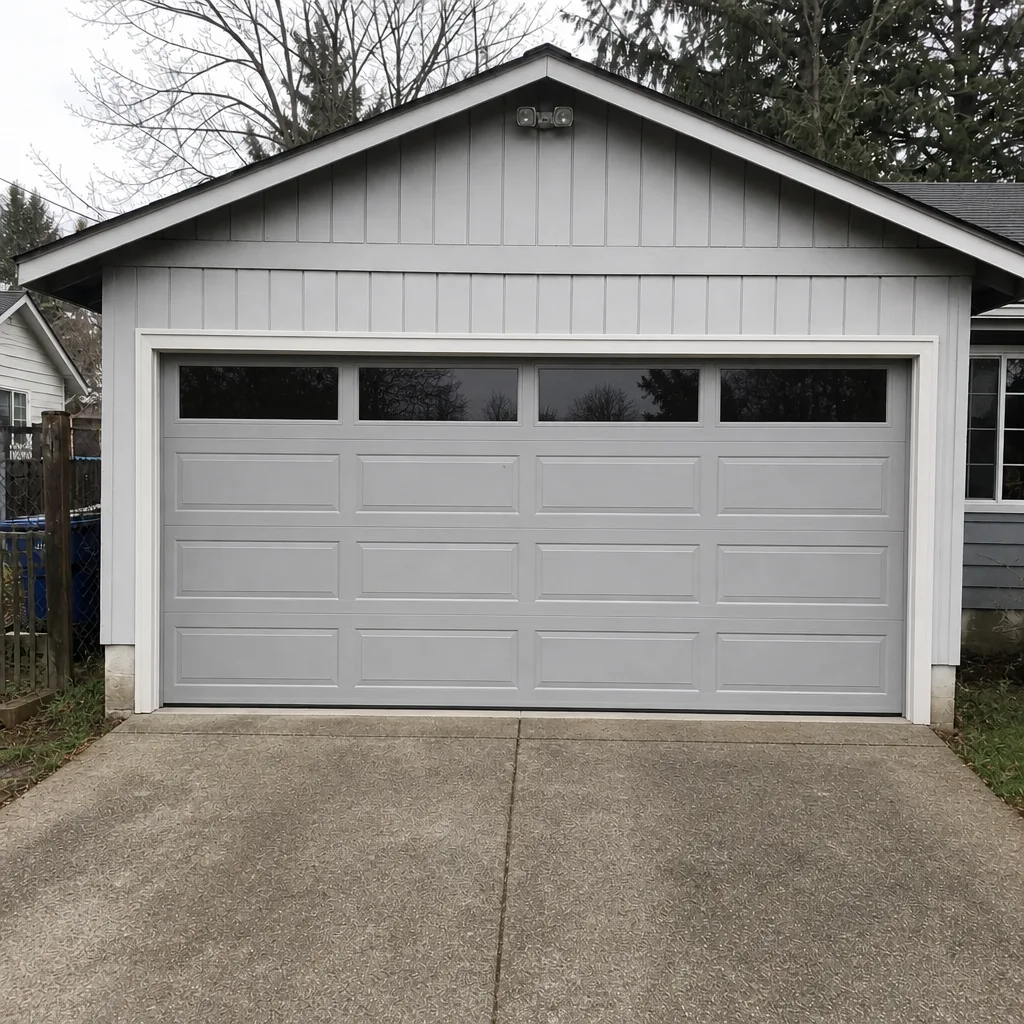 After
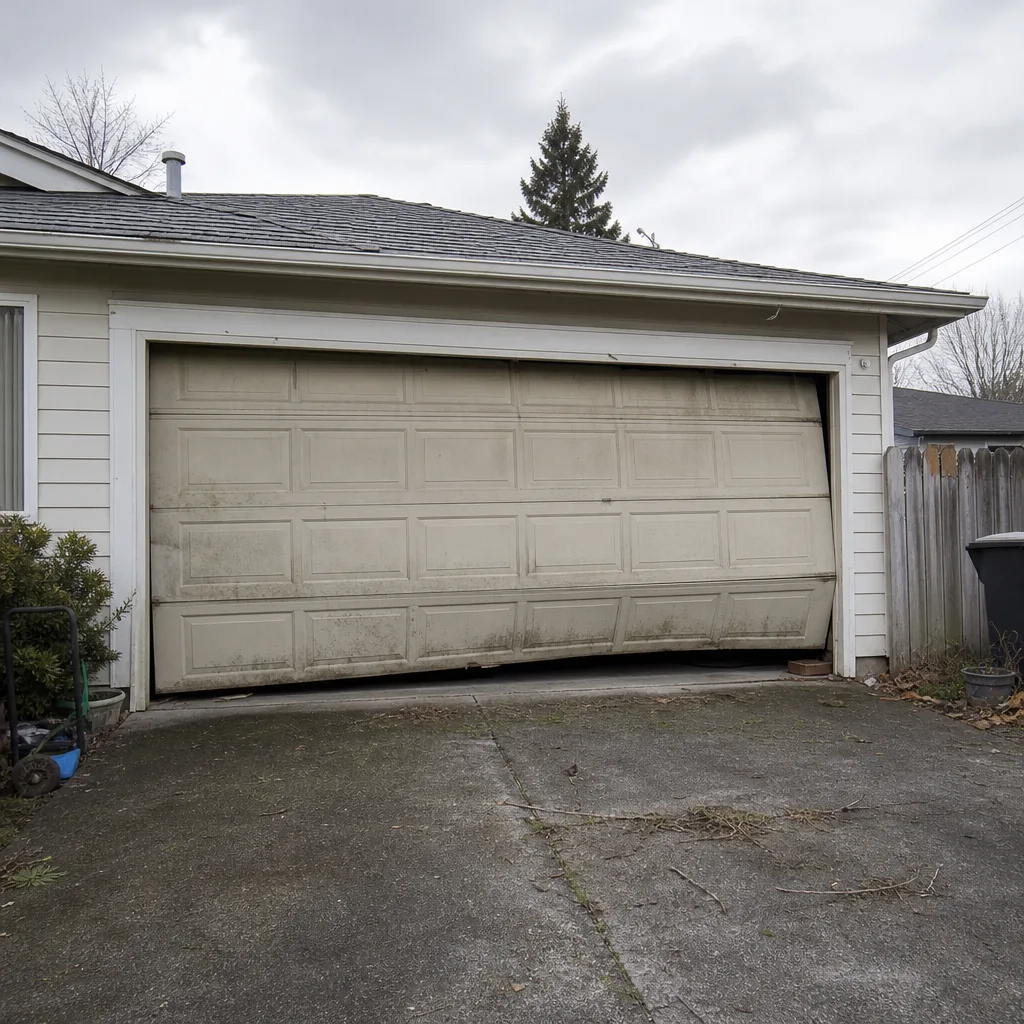 Before
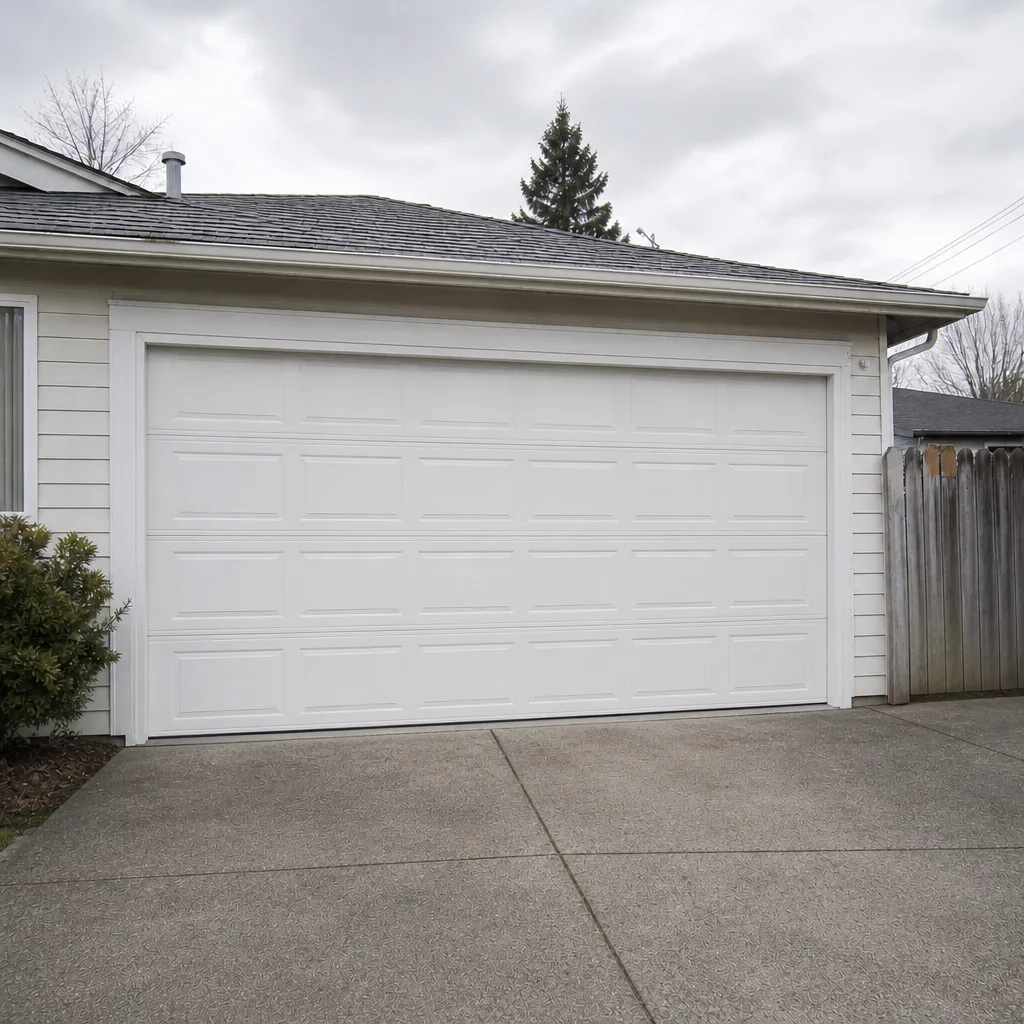 After
When to Call a Professional
Some garage door problems are genuinely not a homeowner repair. Spring and cable failures, track realignment after a car backs into the door, opener logic-board work, and any repair that requires disconnecting the door from the opener for safety all fall into that category. So does anything involving the tension on a torsion spring; the stored energy in a wound spring can cause serious injury, and the proper tools and training matter. If your door is stuck halfway, hanging crooked, or the opener runs but the door doesn’t move, call a technician.
Some work is a scheduled project rather than a repair: replacing a door, upgrading to an insulated model, or choosing a custom carriage-house door. That’s a measurement-and-order process, not same-day work, and it starts with a free measure and a written price rather than a phone estimate. Garage Door Repair Tacoma Pros offers free estimates in Tacoma. Call (866) 937-8952. We answer 24/7. Fast dispatch from 7am to 7pm, Sunday through Friday. Whatever brand is on your house, we work on it.
Frequently Asked Questions
There’s no single best brand for Tacoma, and anyone who tells you otherwise is selling that brand. The best choice depends on local parts availability, insulation rating, steel gauge, and warranty terms. Clopay, Amarr, Wayne Dalton, and Raynor all make strong residential doors, but the deciding factor in Tacoma is which one your technician can get parts for on a reasonable timeline. Call (866) 937-8952 for a free estimate and we’ll tell you what’s realistic for your home.
For an attached garage, yes, an insulated door is a smart upgrade in Tacoma’s wet climate. An uninsulated steel door sweats on the inside face, which creates persistent humidity in a connected garage and can affect the room above it. Insulation also dramatically reduces noise. If the garage is a detached shed or workshop, uninsulated is fine. Call (866) 937-8952 and we can help you decide what fits your setup.
Choose based on the smart-home ecosystem you already use, not horsepower. LiftMaster and Chamberlain both run MyQ, so they integrate cleanly with one another and with common smart-home hubs. Genie uses its own Aladdin Connect app, which works well but is a separate ecosystem. If you don’t care about smart features at all, brand matters less than quiet operation and parts availability. Our technicians work on all four major opener brands, so Garage Door Repair Tacoma Pros can service whatever you choose.
It usually means “parts only, with exclusions, for as long as you own the door.” Springs typically have a shorter warranty, labor is almost never covered, and environmental rust is commonly excluded. Some warranties require the original installer for claims, and some don’t transfer to a new owner without registration. Read the actual document before relying on it, and ask the sales rep what is and isn’t covered in writing. Call (866) 937-8952 if you want help interpreting a warranty on an existing door.
A 24-gauge steel door has a thicker outer skin than a 26-gauge door, which makes it more resistant to denting and better at holding a finish coat over the long run. In a wet climate, a 26-gauge door is more vulnerable to rust once a dent cracks the paint. Heavier gauge costs more upfront and less over the door’s life. Ask for the gauge spec in writing on any quote. Call (866) 937-8952 for a free estimate and a gauge comparison on doors you’re considering.
Standard steel doors work for most Tacoma homes. A custom or specialty door makes sense when architectural match matters: a Craftsman bungalow, a mid-century home, or a Tudor near Wright Park. Wood carriage-house doors are beautiful but need re-sealing every couple of years in a wet climate. Steel carriage-style doors give the same look with less upkeep. Full-view aluminum suits contemporary homes. Call (866) 937-8952 to talk through which fits your house and your maintenance preference.
The Bottom Line
The right garage door brand for a Tacoma home comes down to three things: local parts availability, insulation rated for a wet marine climate, and a warranty the manufacturer will actually honor. National brand rankings are a starting point, not the answer. Focus on steel gauge (24-gauge is worth the step up from 26), insulation (polyurethane and steel back beats polystyrene), and a warranty you’ve read in full. For openers, choose by ecosystem (MyQ or Genie) rather than horsepower. And keep in mind that the technician who shows up matters as much as the brand on the door; a multi-brand specialist can repair what’s installed rather than replacing it with what’s easy to sell. Spring and cable work should always go to a trained technician, never to a homeowner with no winding bars.
Call (866) 937-8952 for a free estimate. We answer 24/7. Fast dispatch from 7am to 7pm, Sunday through Friday. Whether you’re weighing brands, replacing a tired door, or fixing a snapped spring on a door that isn’t going anywhere today, we’ll give you a straight diagnosis and an honest recommendation.
Written by the team at Garage Door Repair Tacoma Pros.