
Last updated November 23, 2026
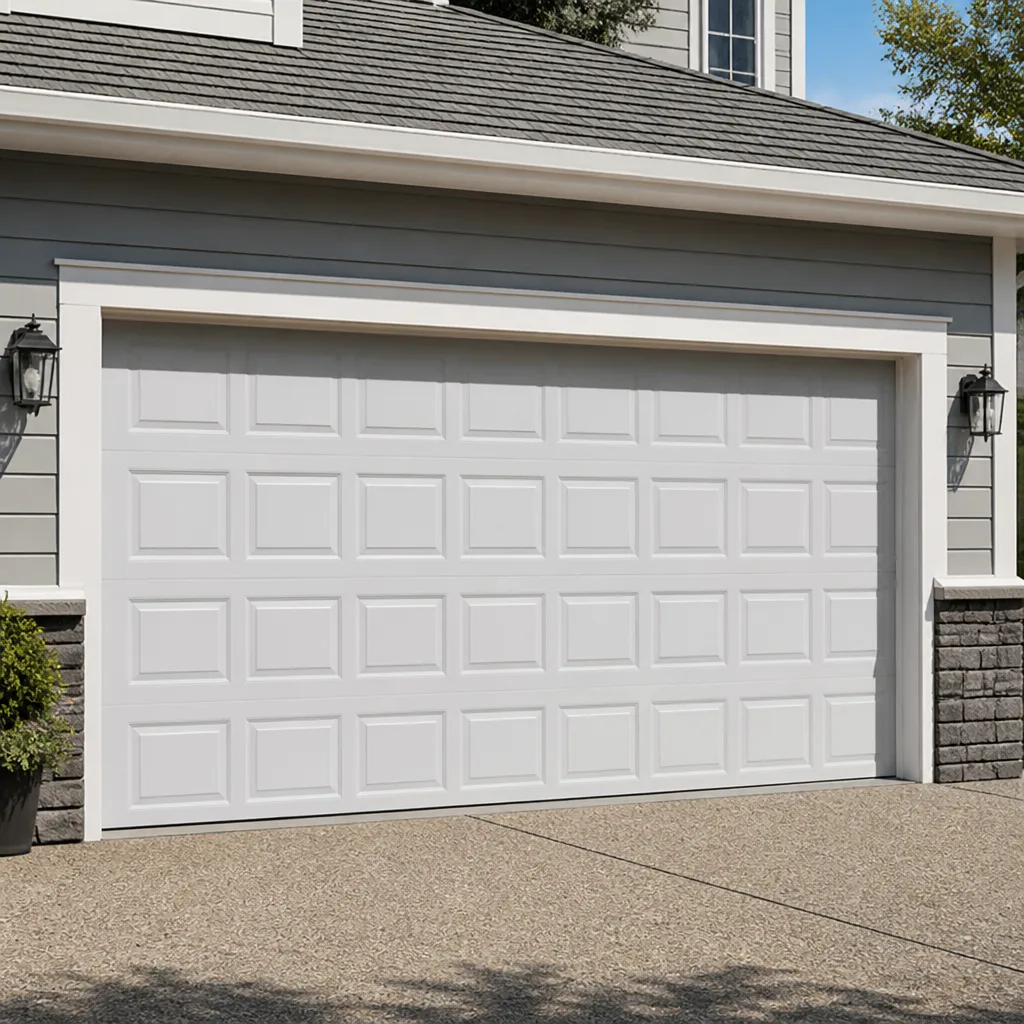 Raised-panel steel
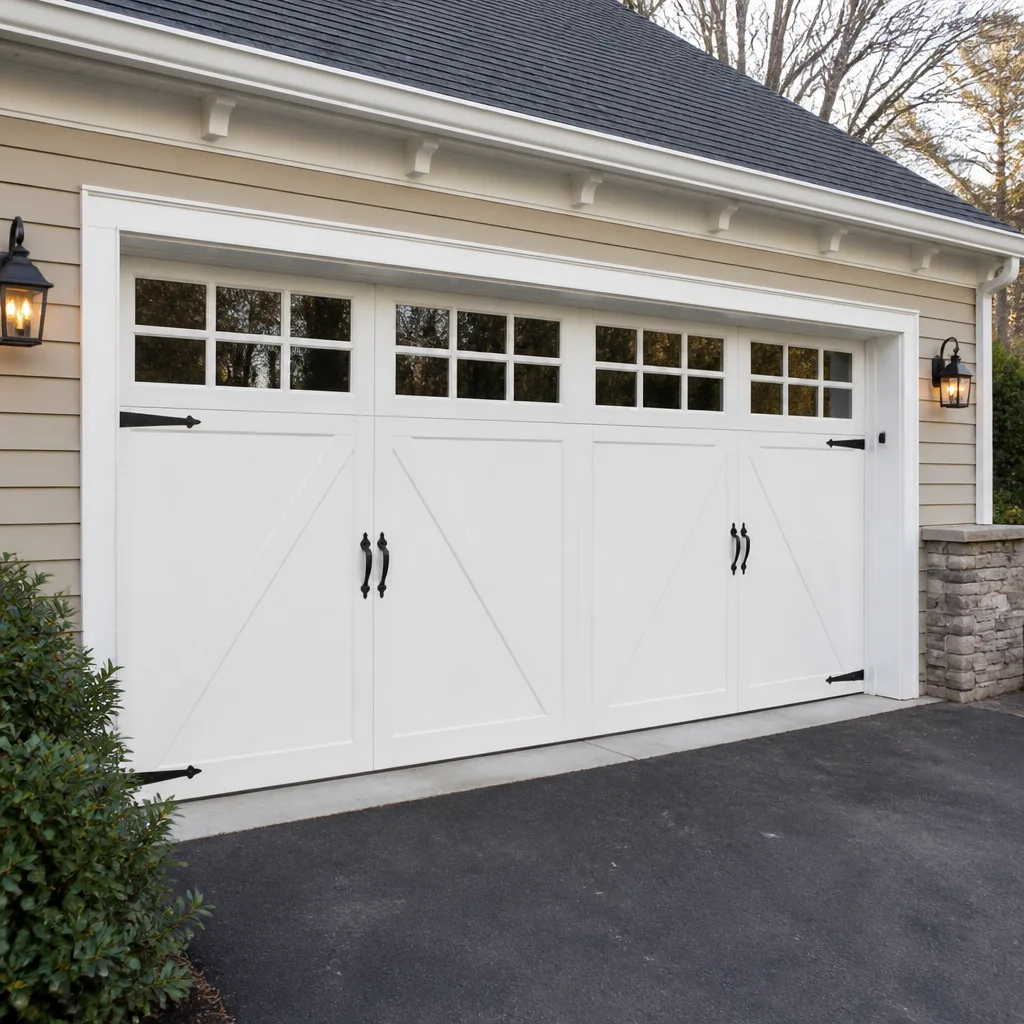 Carriage house
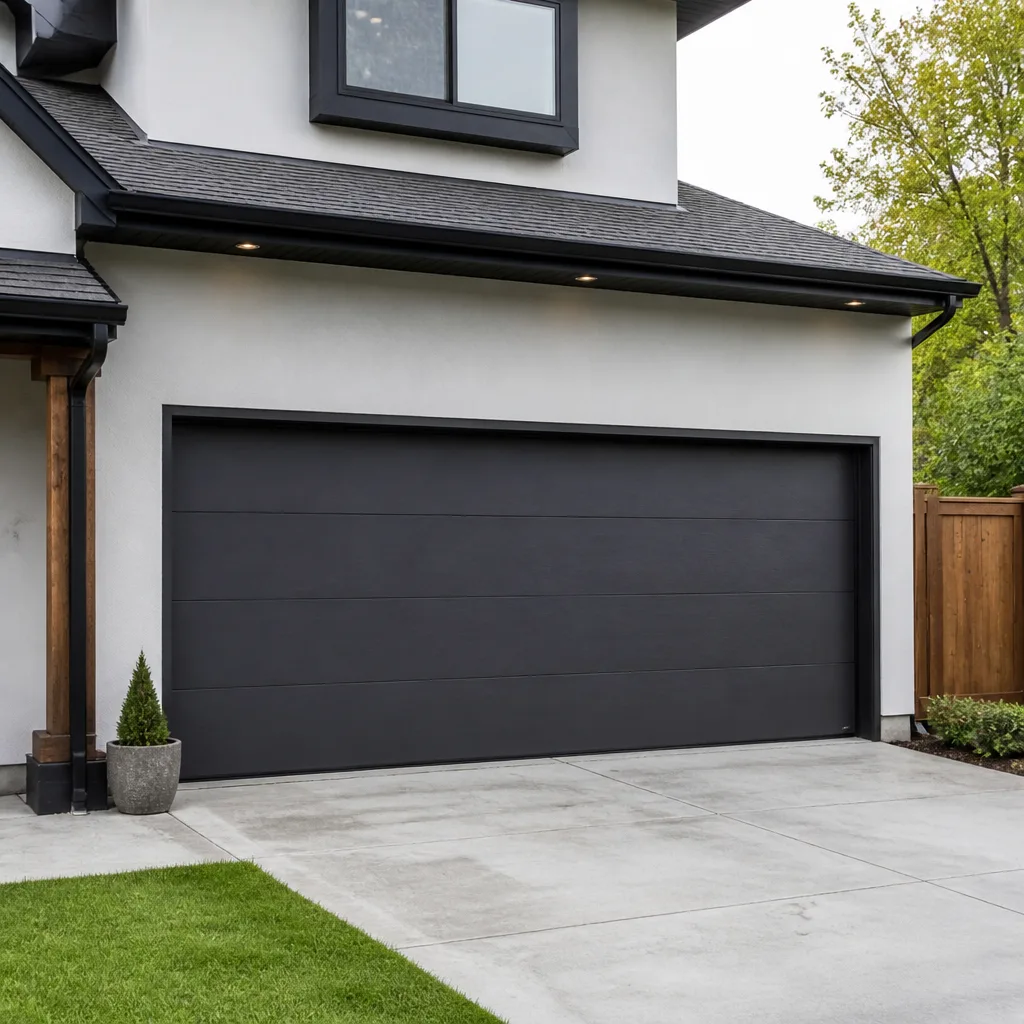 Modern flush
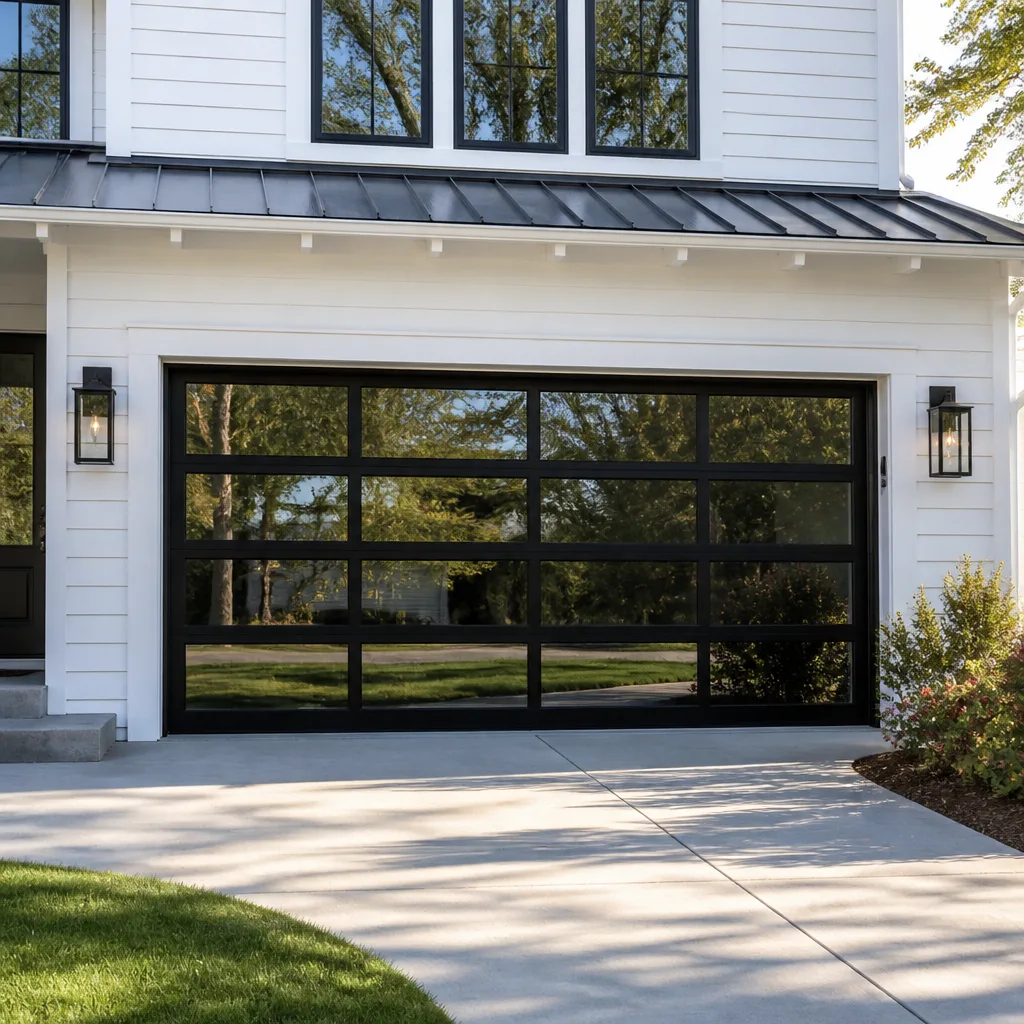 Full-view glass
 LiftMaster openers
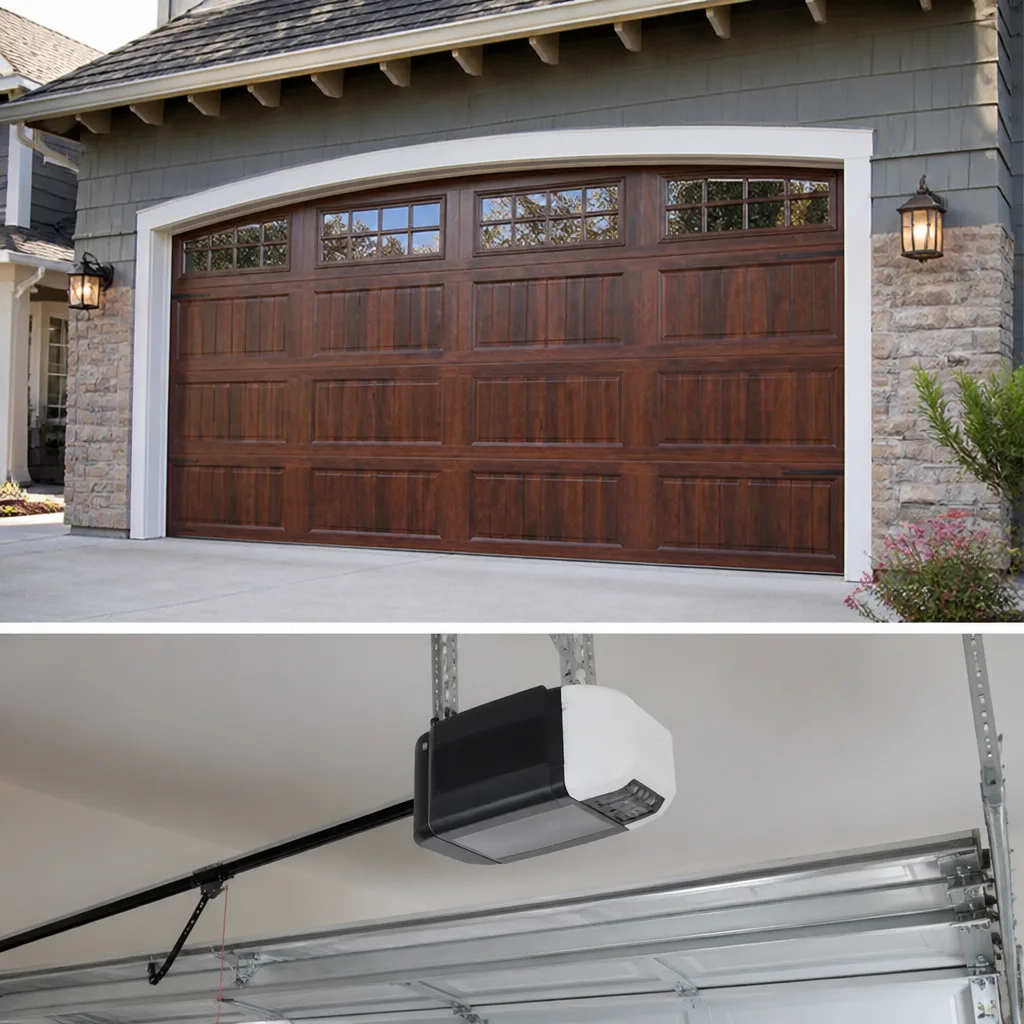 Chamberlain openers
Full 25-point door and opener safety check with every visit - springs, cables, rollers, tracks, and your LiftMaster or Chamberlain opener included
You get a price before we start. It does not change when the pro arrives.
Get your free estimateThe Complete Guide to Garage Doors in Tacoma
Most Tacoma garage doors are working harder than the hardware inside them was ever designed to handle. A large share of Tacoma homes went up between 1950 and 1990, when a standard single-car door was a light, uninsulated slab. Then came decades of upgrades: insulated panels, thicker steel, heavier glass. The rollers, hinges, and springs often stayed original. That mismatch is why so many Tacoma doors sag, shimmy, or snap a spring long before the door itself looks worn out. This guide is organized by what actually fails first in Tacoma, not by the tidiest category. You’ll learn why springs rust here, why some garages need structural work before a new door goes up, how to match an opener to the door weight, and when repair stops making sense.
Quick Answer
Garage door trouble in Tacoma usually traces back to aging hardware under a heavier door, added to moisture that attacks springs and seals. Spring repair is the most common fix and the most dangerous to attempt yourself. The honest choice between repair and replacement comes down to the overall condition of the door, the opener, and the hardware, not just the part that broke.
Styles & brands we work with
- Raised-panel steel
- Carriage house
- Modern flush
- Full-view glass
- LiftMaster openers
- Chamberlain openers
Table of Contents
- How a Garage Door System Works (and What Breaks First in Tacoma)
- Why Tacoma’s Climate Is Hard on Springs and Seals
- Tacoma Housing Stock: What Older Garages Need Before a New Door
- Single-Car vs. Double-Car Door Failure Patterns
- Matching Opener Horsepower to Door Weight
- Repair First or Replace? What Full-Scope Service Really Means
- Spring Repair and Electrical Work: Where Danger Lives
- What Garage Door Work Costs in Tacoma
How a Garage Door System Works (and What Breaks First in Tacoma)
A garage door is a balanced machine, not a slab on a track. Torsion or extension springs hold most of the door’s weight so your opener only has to nudge it up and down. Cables transfer that spring tension to the door’s corners. Rollers and hinges let the panels articulate around the curve. The opener provides control, not lifting power.
When the balance slips, wear concentrates in a predictable order:
- Springs first. They carry the load and cycle thousands of times. This is the number one failure in Tacoma garages.
- Cables and drums second. Once a spring weakens, cables take uneven strain and can jump a drum.
- Rollers and hinges third. Grit and moisture wear nylon or steel rollers until the door drags.
- Bottom seal and weatherstripping. Rubber hardens, cracks, and stops sealing against the concrete.
- Opener last. A struggling opener is often a symptom. It’s compensating for a door that’s no longer balanced.
That order matters when you’re diagnosing. A noisy, jerky door with a fresh-sounding opener usually means the problem is in the balance, not the motor. When the opener itself is the issue, we handle garage door opener repair as its own job, because running a tired motor against a heavy door only wears both out faster. If your door won’t move at all, that’s the case where you want someone on the way rather than a weekend of guessing. We answer 24/7, with fast dispatch from 7am to 7pm, and we work on the brand that’s already on your ceiling.
Why Tacoma’s Climate Is Hard on Springs and Seals
Our part of the Pacific Northwest sits in a cool, damp climate with wide swings between wet winters and drier summers. That pattern is genuinely tough on garage door components, and it shapes what we see fail around Tacoma.
- Spring corrosion. Moisture condenses on cold steel springs inside an unheated garage. Rust pits the wire, and pits become stress points. A pitted spring doesn’t warn you. It snaps.
- Bottom seal rot. The rubber seal sits against concrete that stays damp. Over a few winters it hardens, tears, and lets water and pests under the door.
- Track and roller friction. Humidity swells wooden jambs and rusts steel tracks. Doors start to bind at the same point every time.
- Temperature cycling. A steel door expands in summer and contracts in winter. Over years, that flex loosens fasteners and works hinges out of alignment.
The practical takeaway: in Tacoma, springs deserve a visual check each season, and any sign of rust means planning a replacement rather than waiting for the snap. A torn bottom seal is cheap to fix and expensive to ignore, because water under the door damages the door, the sill, and anything stored along the wall. If you’re already hearing grinding in the tracks, it’s worth looking at garage door repair before a small alignment problem turns into a bent panel.
Tacoma Housing Stock: What Older Garages Need Before a New Door
Many Tacoma homes from the mid-century era have garages that were framed for a light wooden door. A modern insulated steel door can weigh considerably more, and the load lands on the header above the opening as well as the springs. Before a new door goes up, a technician should verify the structure behind it can carry the weight.
Here’s how a proper pre-installation check runs:
- Measure the opening and the headroom. Torsion springs need clearance above the door; low-headroom setups need different hardware.
- Check the header and jambs. A sagging or undersized header may need reinforcement before a heavier door is hung safely.
- Inspect the tracks and mounting. Old tracks set for a lighter door may need replacement, not just re-alignment.
- Confirm the power source. The opener outlet and any safety sensors need to work with the new system.
- Match the new door’s weight to the springs and opener. A door and its springs are a matched pair; never buy the door without the spring calculation.
For bungalows and ranch-style homes around Tacoma, this step is where surprises surface, and it’s better to find them before the door arrives. We’d rather flag needed structural work up front than hang a heavy door on a header that wasn’t built for it. When you’re ready to look at new doors, our garage door installation service walks the opening, checks the framing, and gives you a written price before anything is ordered.
Single-Car vs. Double-Car Door Failure Patterns
Single-car and double-car doors age differently, and Tacoma’s mid-century tract housing has plenty of both. Knowing which door you have tells you what’s likely to wear out first.
Single-car doors (8 to 9 feet wide)
These are lighter, so the opener does less work and the springs cycle less stress per lift. The flip side is that single doors are usually older and uninsulated. Failure tends to show up as a single extension spring that finally lets go, a worn bottom seal, or a hinge that pulls loose in a wooden jamb. Because the door is narrow, a snapped spring often leaves it stuck at a slight angle.
Double-car doors (16 feet wide)
A double door weighs roughly twice as much, and its torsion system is what keeps it even. One torsion spring failing on a two-spring setup leaves the door dangerously unbalanced, twisting and binding on the tracks. Wider doors also amplify any track misalignment, so a roller that’s slightly worn at one end makes the whole door shudder. These are the doors where an opener burns out from fighting an unbalanced panel.
The practical rule: a double-car door with any sign of sagging or uneven lift should be looked at immediately, because the load is spread across more hardware and one weak link strains the rest. A single-car door can usually wait a day for a scheduled repair unless it’s stuck open or won’t shut.
Matching Opener Horsepower to Door Weight
Most homeowners pick an opener by brand or price and skip the one number that decides how long it lasts: the door weight it has to lift. A standard opener comes in roughly 1/2, 3/4, or 1 horsepower. An uninsulated single door lifts easily with 1/2 horsepower. A heavier insulated double door, especially one with glass or extra bracing, wants 3/4 or 1 horsepower. Put a light opener on a heavy door and it works at its limit every single cycle.
Here’s how to size it correctly:
- Know the door’s weight. The door manufacturer lists it; if you don’t have the spec, weigh or estimate it with the springs taken into account.
- Add insulation and glass. Both raise weight. A heavier door needs both a stronger opener and correctly rated springs.
- Consider how often it runs. A household that cycles the door many times a day wears a light opener faster than a 3/4 horsepower unit.
- Match the opener to the balance, not just the weight. A correctly balanced heavy door moves easily even with moderate horsepower; an unbalanced door overwhelms any motor.
- Don’t forget safety features. Modern openers need working safety sensors and a proper force setting.
We service LiftMaster, Chamberlain, Genie, and Craftsman openers, so if you’re replacing a tired unit we can match the horsepower to what your door actually weighs. If the opener is fine but the door is fighting it, that’s a balance problem, not an opener problem, and a new motor won’t fix it. Our garage door repair work starts by checking the balance before recommending anything.
Repair First or Replace? What Full-Scope Service Really Means
“Full scope” isn’t a sales term here; it means one call covers the springs, the opener, the door, and the hardware. The decision between repair and replacement comes down to the condition of all four together. If two or three are near the end of their life, replacing them as a set usually costs less over the next few years than fixing them one at a time.
Use this as a working guide:
- Repair is the right call when the door panels are sound, the tracks are straight, and one component (a spring, an opener, a hinge) has failed. That’s a targeted fix.
- Repair still makes sense when the door is old but solid and only the opener has given out; a good door outlasts several openers.
- Replace the door when panels are cracked, dented, or rusting through, or when the existing door is too heavy for its hardware and keeps breaking springs.
- Replace the set when the door, springs, tracks, and opener are all original to an older Tacoma home. Piecemeal fixes add up.
We work across Clopay, Amarr, Wayne Dalton, and Raynor doors as well as the major opener brands, so we’re not steering you toward one manufacturer. The goal is to repair what’s sound and replace only what isn’t.
Spring Repair and Electrical Work: Where Danger Lives
Two parts of a garage door can genuinely injure you: the springs and the opener’s wiring. Springs hold enormous stored tension, and a torsion spring under load can release with enough force to break bones. This is not a part to experiment with. The safe approach is to call a trained professional who has the right winding bars, the right technique, and the knowledge of how to de-tension the system before touching it.
On the electrical side, the opener wiring and any outlet work should be handled with the power off and by someone qualified. If you’re not comfortable with the panel, don’t open it.
What you can do safely:
- Look for rust on the springs and note any visible gap or stretch.
- Check the bottom seal for cracks and replace a torn seal.
- Test the door balance only by disconnecting the opener per the manual, lifting halfway, and seeing whether it holds. If you’re unsure, leave it connected.
- Test the safety sensors by passing an object through the beam while the door closes.
Everything that involves winding, cutting, or adjusting a spring or cable should go to a professional. That’s a standing rule in the trade, and we treat spring repair as a specialty for that reason.
What Garage Door Work Costs in Tacoma
Costs vary with the door’s size, age, and condition, but here’s the typical picture. Every price you get from us is quoted and agreed before any work starts, and the written estimate is the number that applies.
- Spring repair: typically $150 to $350 for a single spring, plus parts. A matched pair usually runs about twice that.
- Opener repair or replacement: typically $150 to $600 depending on the unit.
- General repair (hinges, rollers, tracks, cables): typically $100 to $300 per visit depending on parts.
- New door installation: typically $800 to $2,500 depending on size, insulation, and finish.
- Emergency call-outs: priced the same as scheduled repair. There’s no premium for urgency.
Estimates are free and the price is set per job. If the door, opener, and hardware all need replacing together, we give you one written price for the whole job rather than a dozen separate charges.
Common Mistakes to Avoid
- Picking an opener by price alone. A light opener on a heavy insulated door wears out fast; match horsepower to door weight instead of the sticker.
- Ignoring a rusty spring. Rust on a spring in Tacoma’s damp climate is an early warning. Replace it before it snaps, not after.
- Lubing the wrong things. Grease on a track collects grit; the correct spots are the hinges, rollers, and the spring itself, not the track face.
- Assuming a squeaky door needs a new opener. Noise is usually balance and friction. A new opener on an unbalanced door just burns out faster.
- Hanging a heavy door on an old header. Older Tacoma garages often need header reinforcement before a modern door goes up. Skip that check and you’re loading a frame that wasn’t built for it.
- Calling a replacement before a proper diagnosis. A cracked panel or a snapped spring both look like “needs a new door.” Often a targeted repair is the right answer.
- Leaving a stuck door open overnight. A door stuck open is a security gap. Call for same-day help rather than leaving the house exposed.
See the difference
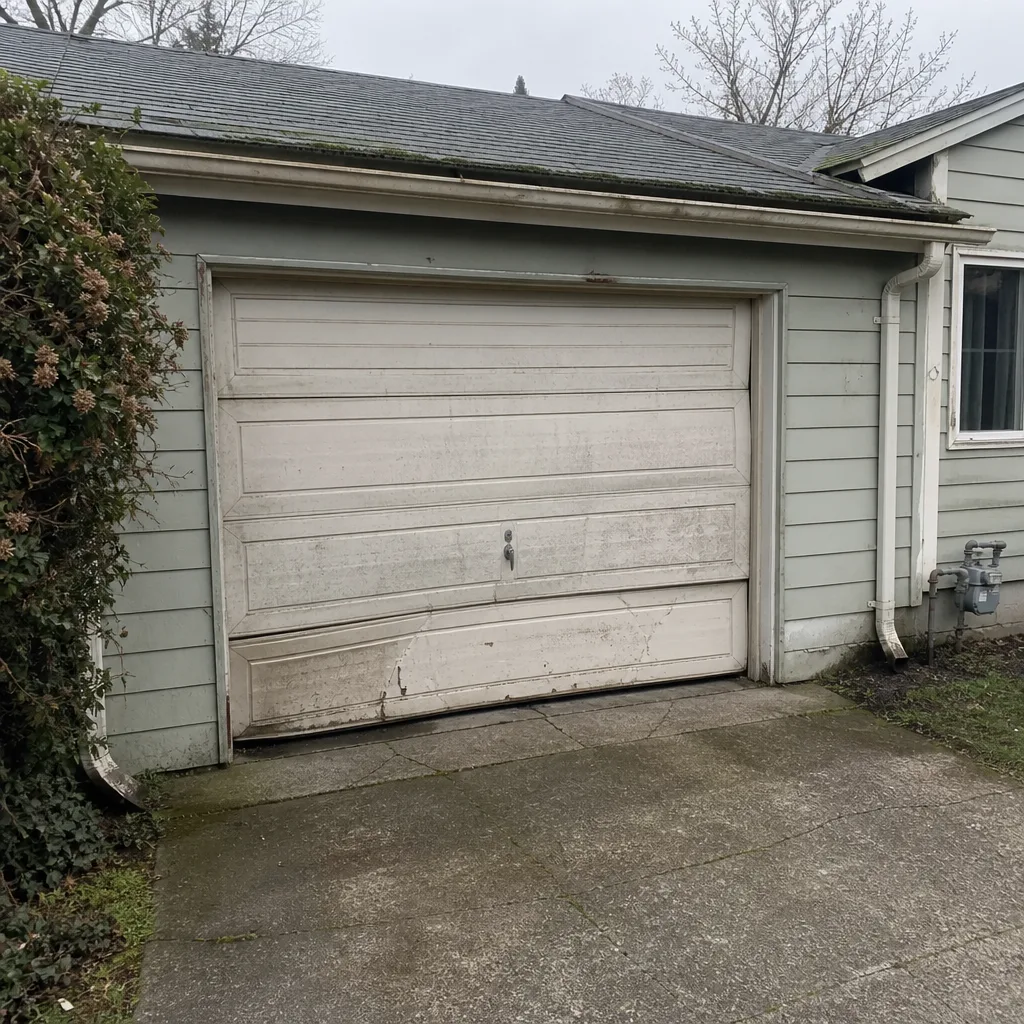 Before
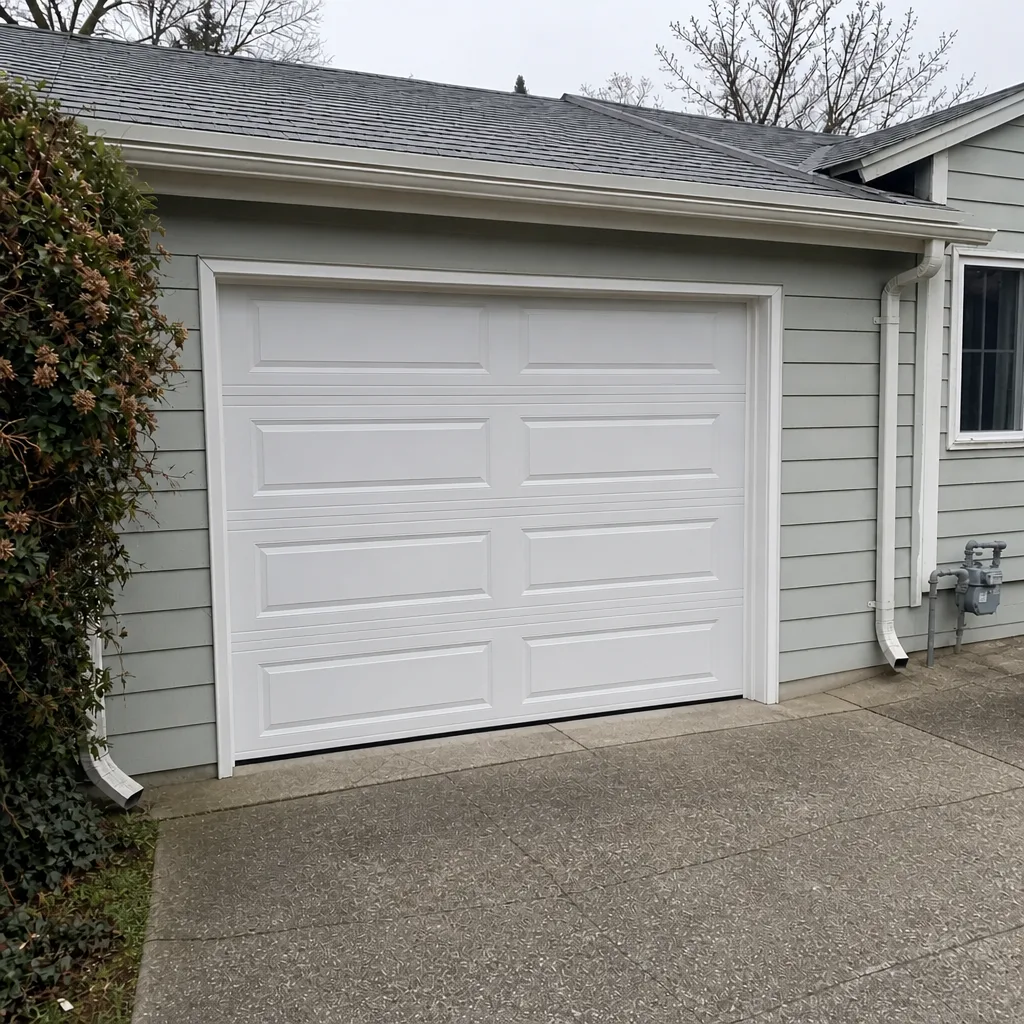 After
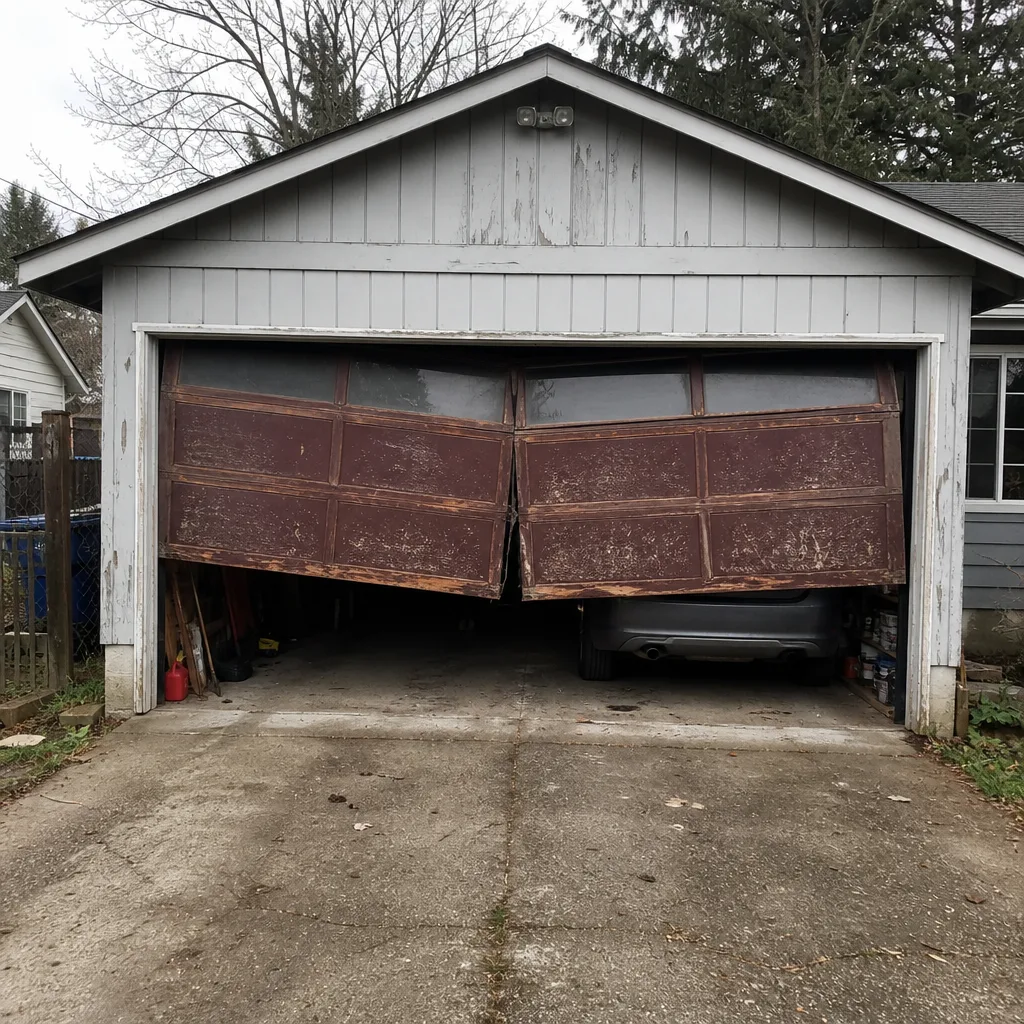 Before
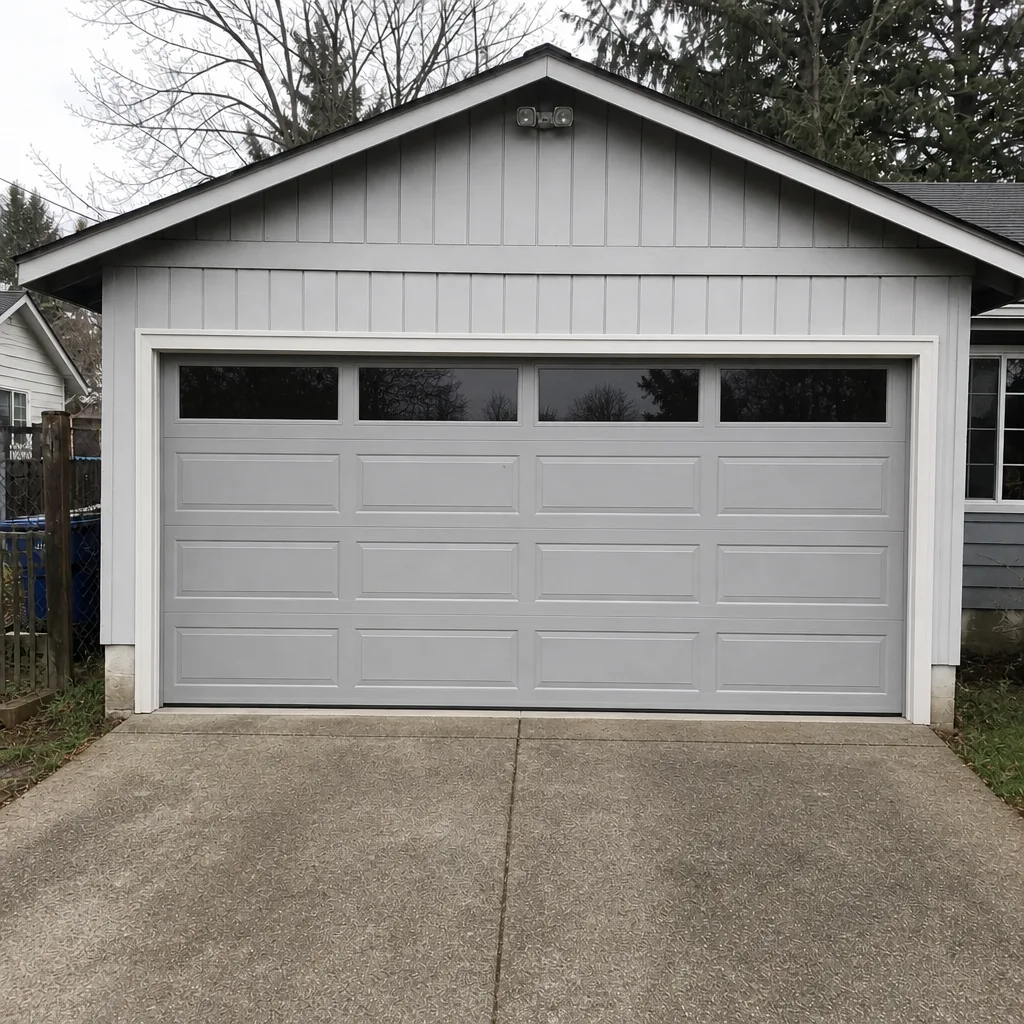 After
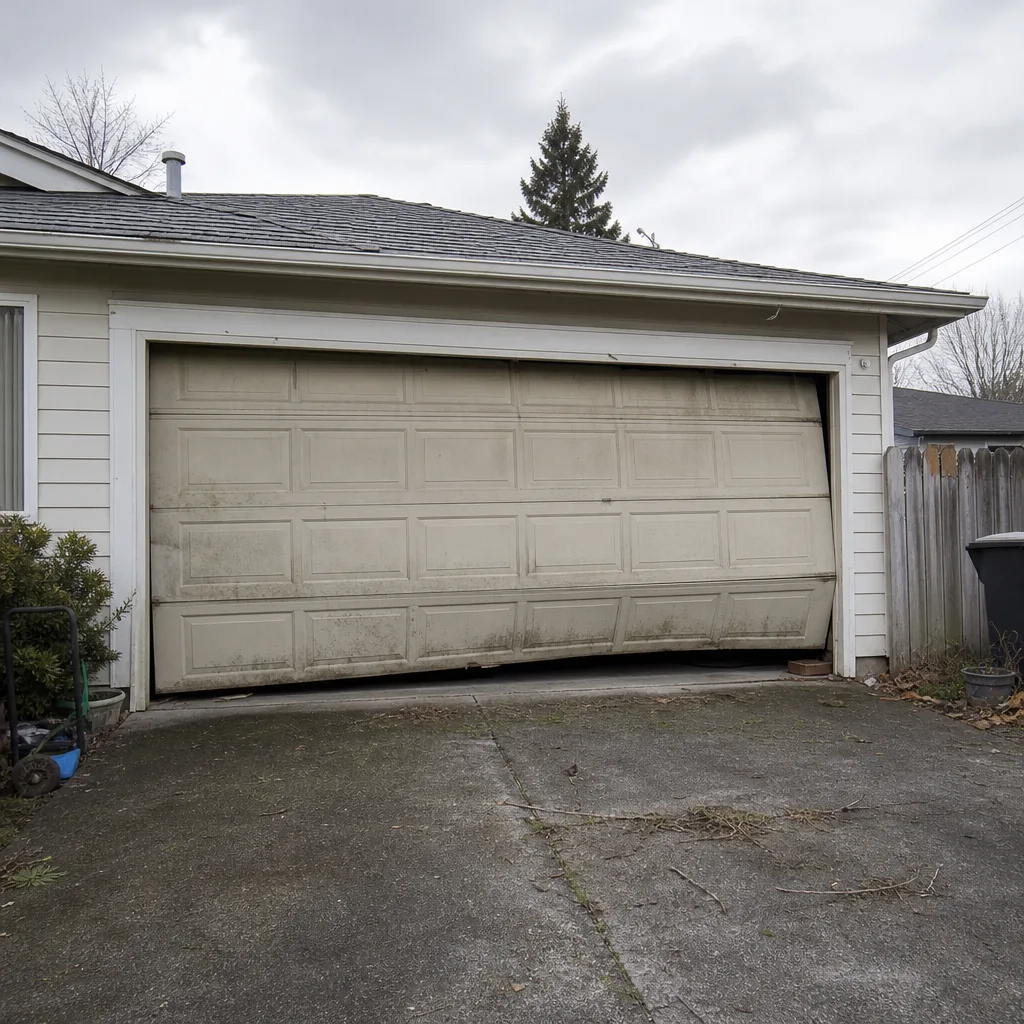 Before
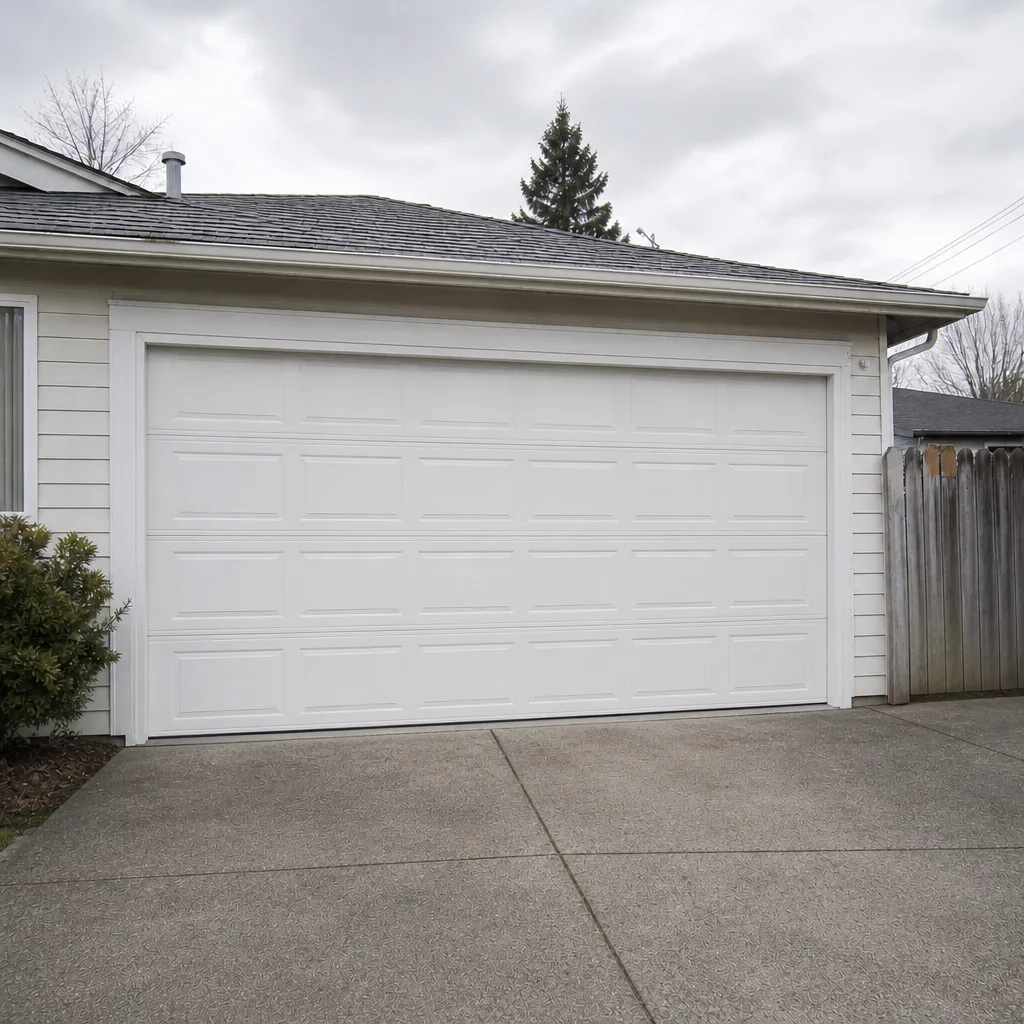 After
When to Call a Professional
Some jobs are a safety line you shouldn’t cross. Call a professional if a spring has snapped, a cable is hanging loose, the door is sagging or unbalanced, the opener sparks or won’t respond, or the door won’t move at all. A door that’s stuck open is a same-day call, because it leaves the house unsecured. And any time you’re unsure whether it’s a repair or a replacement, a diagnosis is worth more than a guess. Garage Door Repair Tacoma Pros offers free estimates in Tacoma. Call (866) 937-8952. We answer 24/7, with fast dispatch from 7am to 7pm, Sunday through Friday. The local pro is licensed and insured as their state requires, and pricing is upfront and agreed before work begins.
Frequently Asked Questions
Most garage door repairs in Tacoma typically run $100 to $350 depending on the part. Spring repair is typically $150 to $350 for a single spring, plus parts. A matched pair is usually replaced together and costs about twice that. Call (866) 937-8952 for an exact quote; estimates are free.
Yes, same-day repair is available for urgent problems like a snapped spring or a door that won’t move. We answer 24/7, with fast dispatch from 7am to 7pm, Sunday through Friday. Call (866) 937-8952 and we’ll get a technician on the way.
No. The written estimate is the price, and it’s quoted and agreed before any work starts. If we find something the estimate didn’t cover, we tell you before we touch it. Call (866) 937-8952 for a free estimate.
Yes. The local professionals we connect you with are licensed and insured as their state requires. Our technicians have up to 11 years of experience. Call (866) 937-8952 to schedule and ask any questions up front.
Moisture is the usual reason. Our damp climate condenses on cold steel springs, rust pits the wire, and the pits become stress points. A pitted spring snaps with little warning. Check for rust each season and replace before failure. Call (866) 937-8952 if you’re seeing rust.
Yes. We work on LiftMaster, Chamberlain, Genie, Clopay, Amarr, Wayne Dalton, Craftsman, and Raynor, so we cover most systems already installed in Tacoma homes. Call (866) 937-8952 and tell us what you have.
The Bottom Line
Garage doors in Tacoma fail in a predictable order: springs first, then cables, rollers, seals, and finally the opener. Our damp climate speeds up spring corrosion and seal rot, and older mid-century garages often need structural checks before a heavier modern door can go up safely. Match your opener to door weight, inspect springs each season, and let repair be the first answer before replacement. When something’s stuck, unbalanced, or making you nervous, get a professional diagnosis. For free estimates in Tacoma, call (866) 937-8952. We answer 24/7, with fast dispatch from 7am to 7pm, Sunday through Friday.
Written by the team at Garage Door Repair Tacoma Pros.